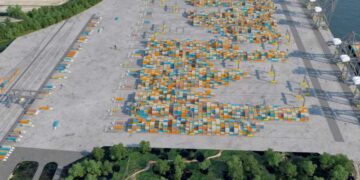


The Vancouver Fraser Port Authority (VFPA) has formally launched the procurement process for the Roberts Bank Terminal 2 (RBT2) landmass and wharf package, valued at approximately C$1 billion. This marks a significant step in Canada’s largest planned marine container terminal expansion, aimed at addressing long-term trade growth and infrastructure capacity constraints on the West Coast.
Procurement will follow a progressive design-build model with target price, in accordance with the Request for Qualifications (RFQ) released. As confirmed earlier in May, the selected contractor will be engaged early in the process under a Design and Early Works Agreement (DEWA) to advance scope definition, cost certainty, and risk allocation prior to final contract execution.
Roberts Bank Terminal 2 Wharf Project - Scope and Details
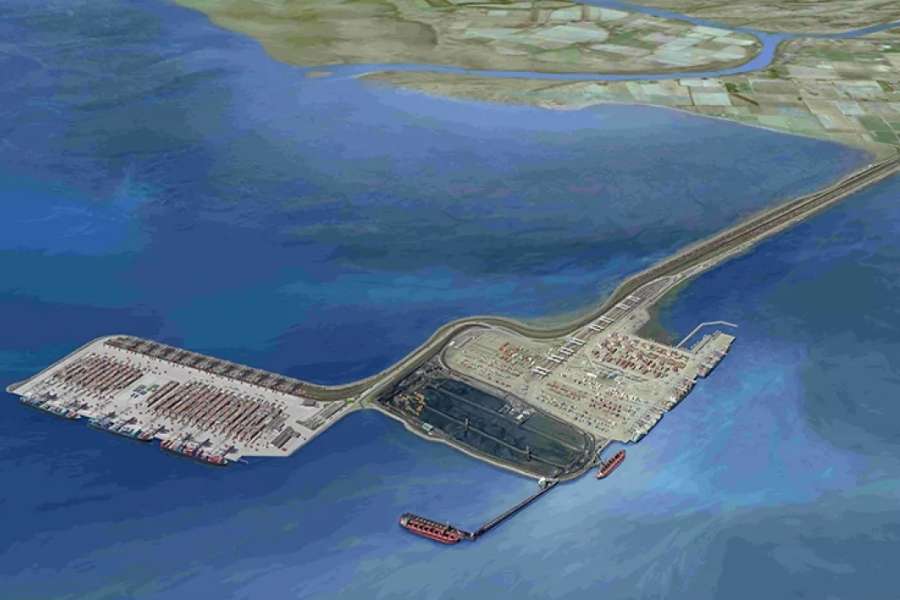
The RBT2 landmass and wharf package includes:
A 100-hectare reclaimed terminal platform in deep water
A 1,300-metre wharf structure and berth pocket
A 35-hectare widened causeway, including road and rail infrastructure
An expanded tug basin
Environmental components such as fish passage works, tidal marsh restoration, and habitat offsets, many of which will be led by Indigenous partners
Upon procurement process confirmation in May 2025, VFPA announced that construction was expected to begin with early works in 2027, with land reclamation and marine structures progressing from 2028 onward. The terminal is scheduled to enter operations by the mid-2030s, with the landmass forming the foundation for a future third-party terminal operator
Progressive Design-Build and Procurement Strategy
It is understood that the procurement is being delivered in three phases:
RFQ release – now open to teams with expertise in marine infrastructure, regulatory interface, Indigenous engagement, and collaborative contracting.
DEWA phase – up to three shortlisted proponents will participate in collaborative design, constructability input, and risk planning, following early contractor involvement (ECI) principles.
Target-price design-build contract – a single contractor will be appointed based on final scope alignment and cost confidence to undertake full construction delivery under a target-price mechanism (similar to an alliance contract).
This procurement structure aims to reduce delivery risk while supporting integration of Indigenous, environmental, and permitting requirements. The PDB model builds on lessons from other large-scale Canadian infrastructure programs where ECI has improved delivery outcomes.
Separate procurement packages for terminal systems, intermodal works, and rail interface will be released in future stages.
RFQ Details
The RFQ invites qualified design-build teams to express interest in the delivery of the wharf and landmass scope under the DEWA and subsequent target-price model. Teams must demonstrate:
Capability in large-scale marine and port infrastructure
Proven track record in progressive contracting
Experience in environmental mitigation and Indigenous partnership delivery
Familiarity with regulatory compliance in federal/provincial marine environments
Procurement documents are available at bcbid.gov.bc.ca and RFQ submissions are due by September 2025, with shortlisting expected later in the year.
Strategic Importance and Stakeholder Engagement
Once operational, the RBT2 terminal is expected to add 2.4 million TEU per year to Vancouver’s capacity, a more than 30% increase in West Coast container handling capability. It is projected to contribute approximately C$3 billion annually to Canada’s GDP and will play a central role in national trade resilience.
The project has received full federal and provincial environmental approvals, and 27 First Nations have signed mutual benefit agreements with VFPA. Further permitting under the Fisheries Act and Species at Risk Act is expected to be finalized by October 2026. Environmental commitments will be implemented in partnership with Indigenous groups, including tidal marsh restoration and fish habitat creation.
“We’re excited to issue the request for qualifications today and move this vital project forward. To meet Canada’s needs in today’s quickly evolving trade landscape, we have accelerated our efforts to deliver Roberts Bank Terminal 2—a project that will strengthen Canada’s economic security and deliver trade resilience,” said Victor Pang, CFO at the port authority.
“The terminal will be a catalyst for economic transformation nationally—from supporting Prairie grain exports and B.C.’s forestry sector, to communities who depend on reliable and affordable access to essential goods on store shelves.”
The video below is from 2023, and Robin Silvester, president and Chief Executive Officer of the Vancouver Fraser Port Authority at time, provide further details on the project (courtesy of BNN Bloomberg).
Related Project and News
- Port of Vancouver Confirms Procurement Process for Roberts Bank Terminal 2 Construction
- Infrastructure Ontario Advances QEW Skyway Twinning Project with Flatiron-Dragados JV as Development Partner
- Aecon-Kiewit JV awarded Alliance Contract for the Darlington New Nuclear Project Construction in Canada
- Aecon-Pormeleau JV secures contract to design in-water works for Montréal Port Authority