

• Home
  • News
  • Engineering
  • Knowledge Hub
  • Resources
No Result
View All Result
CF BRIEFING
Construction Front | Industry Knowledge Hub, News Portal
  • Engineering
  • News
  • Knowledge Hub
  • Resources
  • Contact Us
  • About us
Construction Front | Industry Knowledge Hub, News Portal
  • Home
  • News
  • Engineering
  • Knowledge Hub
  • Resources
No Result
View All Result
CF BRIEFING
Construction Front | Industry Knowledge Hub, News Portal
No Result
View All Result
Home Knowledge Hub Claims & Contract Administration
patent defect - cracking on wall

Patent vs Latent Defects – What is the Difference?

Denys S. by Denys S.
May,2026
in Claims & Contract Administration, Knowledge Hub
0 0
0
349
SHARES
3.2k
VIEWS
Share on EmailShare on TwitterShare on LinkedinShare on Facebook

Defects are an unfortunate reality of the construction industry, which can significantly impact a project’s budget, program, and quality. These defects, such as concrete cold joints, can also affect structural integrity, functionality, and aesthetics. 

From a commercial and legal perspective, defects are typically divided into two major categories: patent and latent. But what is the difference between them? 

While a patent defect is an obvious problem that is easily spotted during routine and visual checks (i.e. concrete honeycombs), latent defects are usually hidden issues that cannot be visually seen (i.e. cracking in foundations) and are only identified through tests and professional inspections.

In this post, we will explore these categories a bit further and bring further examples, quickly review dilapidation reports and defects liability period – keep reading it. 

What is a latent defect?

In the construction context, a Latent Defect is a concealed or hidden issue within a property/asset that is not immediately apparent during a routine inspection or examination. 

These defects are often not visible to the naked eye and may remain dormant for a significant period, making them challenging to detect without specialized knowledge or equipment.

Some of the key characteristics of latent defects include:

  1. Hidden Nature: Latent defects are typically concealed from view (i.e. termite infestation), often lurking behind walls, under flooring, or within structural components. They may involve problems within the building’s structure, systems, or materials that are not readily observable.
  2. Not Observable During Standard Inspection: When potential buyers or inspectors conduct a standard visual inspection of a property, latent defects are unlikely to be identified. This is because they do not display obvious signs or symptoms during the examination.
  3. Potential for Long Dormancy: Latent defects can exist within a property for an extended period without manifesting any noticeable problems. This dormancy can lead to a false sense of security for property buyers or owners.

Disclosure Challenges: In many jurisdictions, sellers are required to disclose known defects in a property. However, disclosing latent defects can be challenging because even the seller may be unaware of their existence. This can lead to legal disputes if such defects are discovered after the sale.

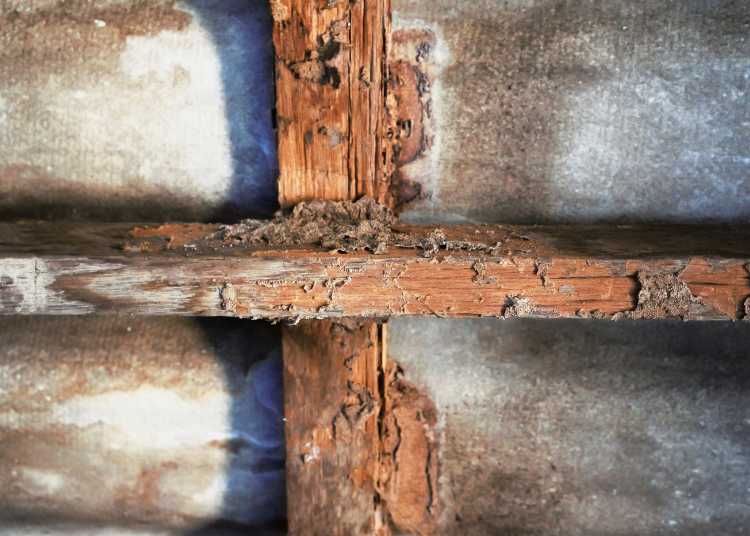
latent defect - termite
Termite infestation is an example of latent defect.

Latent Defect - Examples

Below are some typical examples of latent defects:

  • Termite Infestations: Termites can silently damage wooden structures, often remaining hidden until significant damage occurs.

  • Hidden Plumbing Leaks: Water leaks within walls or under flooring can lead to mold growth and structural deterioration without immediate visible signs.

  • Foundation Settlement: Slow foundation settlement can cause subtle signs such as hairline cracks in walls or uneven floors, which may not be readily noticeable.

  • Electrical Wiring Problems: Faulty electrical wiring concealed within walls can pose a fire hazard, but the issue may not be evident during a standard inspection.

  • Hidden Mold Growth: Mold can develop behind walls or in concealed areas due to moisture issues, and its presence may go unnoticed until it becomes a health concern.

  • Undetected Roof Leaks: Roof leaks can infiltrate the structure, causing damage that becomes apparent only when structural or cosmetic issues arise.

What is a patent defect?

Conversely to latent issues, a patent defect is a visible issue, flaw, or problem within a property or asset that is straightforwardly identified during a standard inspection or examination. 

Some of the key features of patent defects include:

  1. Visible to the Naked Eye: Patent defects are typically observable with the naked eye during a standard visual inspection (i.e. cracking on walls). They may manifest as clear signs of damage, wear, or deterioration.
  2. Likely to impact asset valuation: Patent defects can have immediate consequences on a property and asset’s value, safety, or functionality. 

Transparency in Disclosure: Sellers are typically obligated to disclose patent defects when selling a property. This transparency ensures that buyers are aware of any visible issues that may affect their decision to purchase.

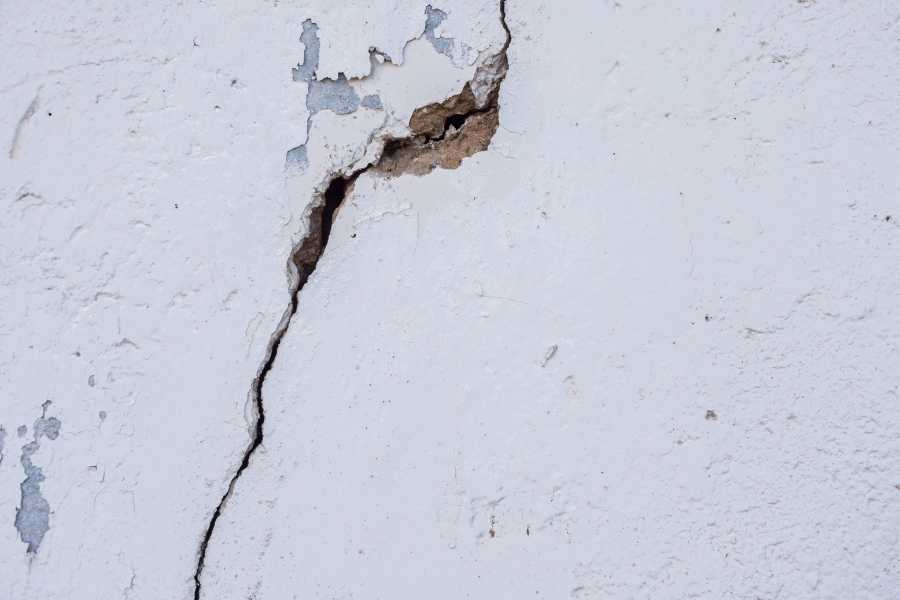
patent defect - cracking on wall
Cracking on wall is a common example of a patent defect. They are usually associated with uneven settlement.

Patent Defect - Examples

Some examples of patent defects are:

  • Cracked Walls: Cracks in interior or exterior walls are readily visible and often indicate structural issues, settling, or foundation problems.

  • Leaking Plumbing Fixtures: Dripping faucets, visible water leaks under sinks, or damaged plumbing fixtures are patent defects requiring immediate attention.

  • Roof Damage: Missing or damaged roof shingles, visible water stains on ceilings, or sagging roofs are patent defects that signify roof problems.

  • Broken Windows or Doors: Broken windows or doors, whether due to vandalism, accidents, or wear and tear, are patent defects that are easily noticeable.

  • Exposed Electrical Issues: Exposed or frayed electrical wiring, malfunctioning outlets, or circuit breakers in disrepair are patent defects with safety implications.

  • Mold Growth (Visible): Visible mold growth on walls, ceilings, or other surfaces is a patent defect and often indicates an underlying moisture issue.

Difference between a Patent and a Latent Defect - Summary

The table below summarises the differences between patent and latent defects. 

Aspect

Patent Defects

Latent Defects

Visibility

Visible and obvious during standard inspections

Concealed and not apparent during routine inspections

Disclosure by Sellers

Sellers are generally aware and often obligated to disclose

Sellers may not be aware, making disclosure challenging

Inspection Requirements

Easily identified without specialized inspections

Typically require specialized inspections or expertise to detect

Examples

Cracked walls, leaking fixtures, roof damage, broken windows, exposed electrical issues, visible mold growth

Termite infestations, hidden plumbing leaks, foundation settlement, hidden electrical wiring problems, concealed mold growth, undetected roof leaks

How to identify Latent Defects then?

As discussed above, spotting latent defects can be challenging, and they might require specialized professionals, professional services, and a review of available information to be identified, such as: 

  1. Professional Inspection: Qualified and experienced home inspectors or structural engineers to conduct a thorough property inspection. These professionals are trained to look for hidden issues and use specialized tools to uncover latent defects.
  2. Review Documentation and Undertake an Asset Due Diligence: It is worth examining any available documentation related to the property or asset, such as past inspection reports, maintenance records, and renovation history. This information may provide clues about previous issues and repairs, as well as details about the structure and materials implemented during the construction phase..
  3. Consult with Experts: If you notice any suspicious signs or experience problems that seem out of the ordinary, consult with professionals such as plumbers, electricians, pest specialists, or structural and geotechnical engineers. They can perform more in-depth assessments.
  4. Foundation Investigations: Foundation problems can lead to significant repair costs, and it is one of the most critical latent defects that can be found in a structure. Observe symptoms like uneven floors, doors that don’t close properly, or visible cracks in walls and foundations.
  5. Understand the Property’s History: Research the property’s history and previous use. Some latent defects may be related to past activities, such as environmental contamination or improper renovations.
  6. Be Cautious with Older Properties: Older homes are more likely to have latent defects due to wear and tear over time. Extra attention should be given to inspecting hidden areas.
  7. Check for Water Damage: Be vigilant about signs of water damage, as water-related issues often lead to latent defects. Look for water stains on walls or ceilings, musty odors, or warped flooring, which may indicate hidden leaks.

In case you are in the process of buying or selling a property or an asset, the use of an asset condition report is recommended. 

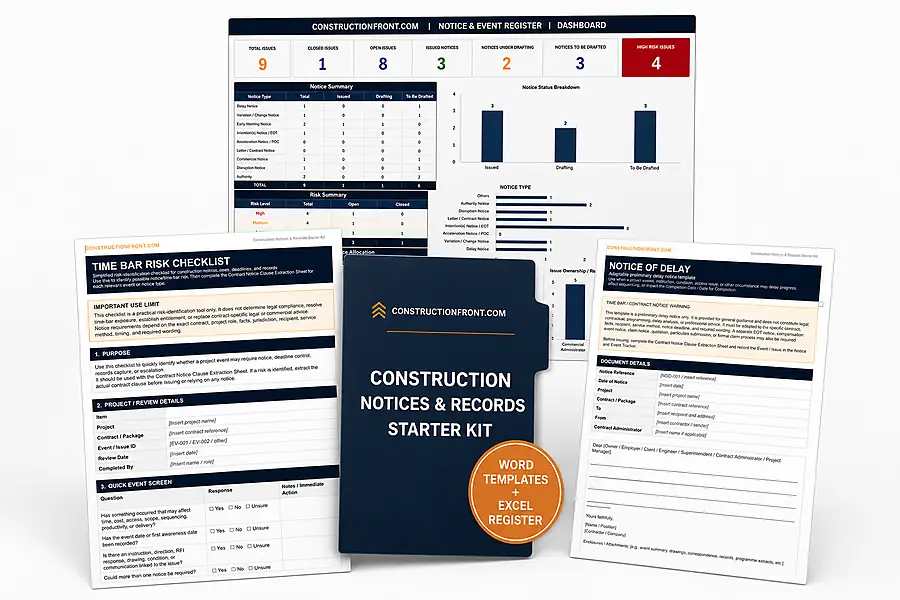
Construction Notices and Records Starter Kit
Notices and Records Starter Kit
When a latent defect becomes a claim, the notice and records need to be right from the start.
Notice templates, time-bar checklist, clause extraction sheet and event tracker. Built for live project use across NEC4, FIDIC and bespoke contracts.
Get the Starter Kit →

Patent and Latent Defects - FAQ

What is a property condition report?

A property or asset condition report is a formal document that provides a comprehensive assessment of the physical condition of a property/asset, including its structural components, systems, and any defects or potential issues.

It typically used as a tool for buyers, sellers, landlords, and construction professionals to understand and document the property’s condition, and help taking informed decisions on transaction and ensure transparency.

What is a defect liability period (DLP)?

A defect liability period, or DLP, is a specific timeframe defined in a construction contract in which the contractor/builder is responsible for rectifying any defects or issues that arise after a construction project’s completion.

What is a dilapidation report?

A dilapidation report is a comprehensive report that details the existing condition of a property, particularly its structural and cosmetic aspects. Typically, it is prepared by a qualified professional before construction or renovation work begins in the vicinity. 

This report serves as a baseline reference to assess any potential damage or changes to neighbouring properties that may arise due to the construction works.

Construction Notices and Records Starter Kit
Ready to go further?
Defects become disputes when the notices and records are not in place.
The Starter Kit gives you the notice templates, time-bar checklist and event tracker to manage defect and latent condition events properly while the facts are still current.
Managing a live variation or scope change alongside a defect issue? The Variation and Claims Toolkit goes deeper into entitlement and formal submissions.
Get the Starter Kit →
Tags: Claims & Contract Administrationconstruction lawdefects
Previous Post

CPB Contractors selected for upgrades in two RAAF Bases in Western Australia

Next Post

Fluor secures 5-year contract extension with the National Nuclear Security Administration in the US

Denys S.

Denys S.

Denys Schwartz is a civil engineer and certified professional (PMP, CP3P, CAIA) with more than 15 years of experience in the construction industry, specialising in project development, project financing, procurement, contract administration, and dispute resolution for major infrastructure and energy projects. He holds a postgraduate degree in Corporate Finance and has worked on multibillion-dollar projects across Australia, Brazil, and other international markets.

Related Posts

nec4_compensation_event_process
Claims & Contract Administration

NEC4 Compensation Events: How to Notify Them, Protect Entitlement, and Common Commercial Risks

by Denys S.
May,2026
how_to_write_change_order_featured
Claims & Contract Administration

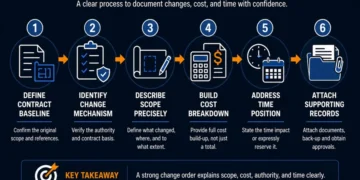
How to Write a Change Order in Construction: Step-by-Step Guide with Template

by Denys S.
May,2026
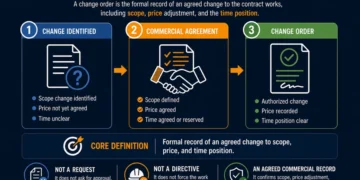
Change order infographic showing progression from identified change to commercial agreement and final formal change order including scope, price, and time position.
Claims & Contract Administration

Change Order in Construction: Meaning, Process, Pricing, Types, and Common Risks

by Denys S.
May,2026
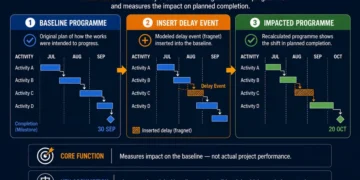
Impacted as-planned analysis infographic showing baseline programme, inserted delay event (fragnet), and resulting impacted schedule with shift in planned completion.
Claims & Contract Administration

Impacted As Planned Analysis: What It Is, How It Works, and When It Fails in Construction Claims

by Denys S.
May,2026
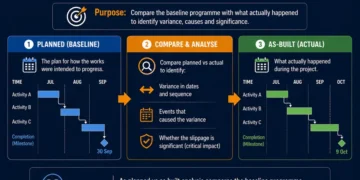
Infographic showing as-planned vs as-built analysis comparing a baseline programme with actual project performance to identify variance and assess delay impact.
Claims & Contract Administration

As-Planned vs As-Built Analysis in Construction: How the Method Works and When to Use It

by Denys S.
May,2026
Next Post
Fluor secures 5-year contract extension with the National Nuclear Security Administration in the US

Fluor secures 5-year contract extension with the National Nuclear Security Administration in the US

What is an EPC Contract

What is an EPC Contract? (Key Features, Examples, and Tips)

Seattle-Tacoma International Airport (SEA) awards $399M contract to Turner for C Concourse Expansion

Seattle-Tacoma International Airport (SEA) awards $399M contract to Turner for C Concourse Expansion

Leave a Reply Cancel reply

Your email address will not be published. Required fields are marked *

I agree to the Terms & Conditions and Privacy Policy.

Stay Connected

Featured Resources

Notice Control — Templates + Checklists + Event Tracking Tool
Construction Notices and Records Starter Kit
Construction Notices & Records Starter Kit
Practical notice templates, checklists and an Excel register for tracking notices, events, deadlines and supporting records.
Access Starter Kit →
Variation Management — Templates + Workflows
Construction Variation and Claims Toolkit
Variation Order & Claims Toolkit
20+ templates, notice letters and workflows for FIDIC, NEC4 and bespoke contracts — contractor and owner side.
Access Variation Toolkit →
LinkedIn

Construction intelligence, commercial insight and practical resources for infrastructure and energy professionals.

Site Map

  • Home
  • News
  • Engineering
  • Knowledge Hub
  • Resources
  • Contact Us
  • About us

Recent Posts

The OL32 Skavsta package will form part of Sweden’s East Link railway programme, a new double-track corridor between Järna and Linköping designed to increase rail capacity and improve regional con

Feronord Consortium Selected for €1.2 Billion OL32 Skavsta Rail Contract in Sweden

May,2026
Skanska wins $1.06 billion MBTA bridge and rail upgrade contract in Massachusetts

Skanska wins $1.06 billion design-build contract for MBTA’s North Station Draw One project in Massachusetts

May,2026

Copyright © 2023 ConstructionFront.Com | Affiliate Disclosure | Privacy Policy | Terms & Conditions

Welcome Back!

Login to your account below

Forgotten Password?

Retrieve your password

Please enter your username or email address to reset your password.

Log In
No Result
View All Result
  • Home
  • News
  • Engineering
  • Knowledge Hub
  • Resources

Copyright © 2023 ConstructionFront.Com | Affiliate Disclosure | Privacy Policy | Terms & Conditions

This website uses cookies. By continuing to use this website you are giving consent to cookies being used. Visit our Privacy and Cookie Policy.

ConstructionFront.com - Newsletter!

Stay at the front of the construction industry with the latest news, market trends, and project insights — delivered by ConstructionFront.com

Name
Enter your email address

Thanks, I’m not interested

Privacy Policy - Terms and Conditions