

On a live project, a change rarely arrives as a clean commercial event. A change order in construction usually starts with a drawing revision, an owner request, an unforeseen site condition, or an instruction that cannot wait for a fully negotiated paper trail. If that change is not controlled properly, the project can slide into unpriced work, disrupted sequencing, disputed entitlement, and avoidable claims.
A change order in construction is the formal record of an agreed change into a construction contract, cope, price adjustment, and time position before the changed work is treated as fully authorized.. In US construction administration, that is the core meaning of a change order.
That distinction matters because not every change-related document does the same job. A request for pricing, a contractor proposal, an interim instruction, and a final change order may all sit in the same document trail, but they do not carry the same commercial effect. If the team uses the terms loosely, it becomes much harder to prove whether the work was merely proposed, instructed pending valuation, or fully agreed.
Research points the same way. The PDH Express review on change orders describes change orders as additions or deletions to the original scope that can alter both contract price and completion date, while the IEOM Society paper on West Bank projects and the International Journal of Applied Science and Technology paper on public projects both link change orders to cost overruns, delay, claims, and project friction when they are poorly managed.
What Is a Change Order in Construction?
In construction, a change order is the formal record of an agreed change to the contract works. It usually confirms:
- what is changing
- why it is changing
- the agreed adjustment to price
- the agreed time position, or that time remains expressly reserved
- the contractual authority under which the change is made
In US-style administration, this is commonly the document used once the parties have negotiated and accepted the change. In broader international usage, similar issues may sit within the variation order mechanism, but the terminology and legal effect depend on the contract form. If your team is focusing on drafting mechanics rather than concept, see how to write a variation or a change order.
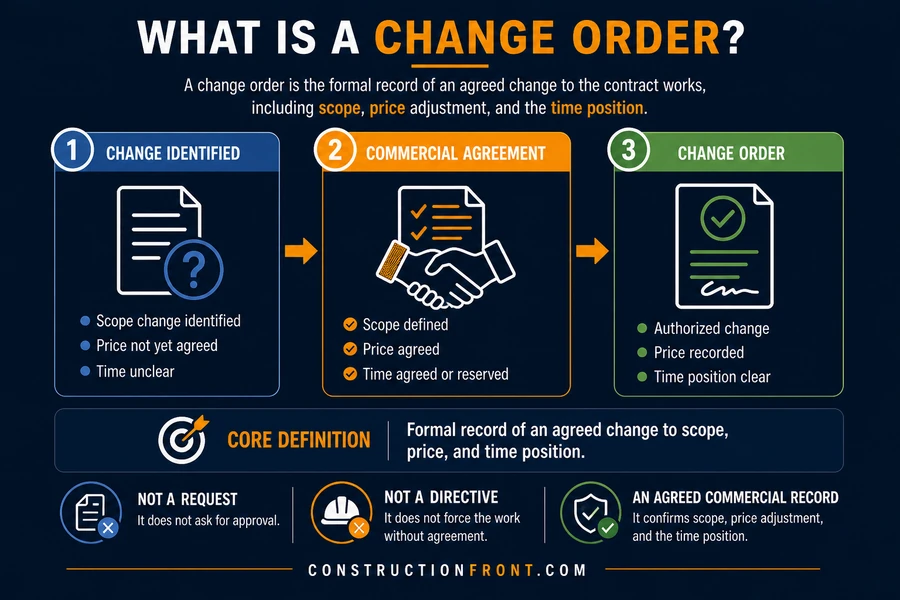
The practical point is simple: not every change-related document is a change order. Some documents request a change. Some instruct a change before price and time are agreed. Some sit within a broader variation regime. If the team treats them as interchangeable, the project loses commercial clarity.
If your project team uses these terms loosely, align them early. A contractor may begin with a contractor change request process, the owner may respond with a directive so the work can keep moving, and the final agreed commercial record may later become a change order or variation order. The file should show that sequence clearly.
Change Order vs CCD vs Variation Request vs Variation Order
Before looking at process or pricing, it helps to separate the four terms that project teams most often confuse.
| Term | Meaning | When it is used | Commercial point |
|---|---|---|---|
| Change Order | An agreed change to the contract works, with the price adjustment agreed and the time position either agreed or expressly reserved. | Used after scope, valuation, and authority have been negotiated to a point the parties can formally record the adjustment. | It gives the cleanest commercial record because the team knows what changed, how it is priced, and whether time is settled or still open. |
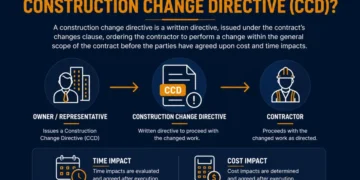
| Construction Change Directive (CCD) | An instructed change requiring the contractor to proceed even though price, time, or both are not yet agreed. | Used where the owner needs the work carried out now and the commercial position will be finalised later. | It keeps delivery moving but leaves valuation and time entitlement live, so notice, records, and cost capture become critical. |
| Variation Request | A contractor-initiated request proposing a change to scope, method, sequence, or commercial treatment. | Used when the contractor is seeking approval, clarification, or valuation treatment before the work is authorised as a change. | It does not authorise the work by itself. Entitlement usually still depends on later instruction or agreement. |
| Variation Order | A broader international term for a formal contract change, often used under contracts that adopt variation terminology instead of change order wording. | Used where the contract form already operates through a variation mechanism rather than a US-style change order process. | Its effect depends on the contract wording. It may record an agreed adjustment, an instructed change, or a wider mechanism with separate valuation rules. |
How the Construction Change Order Process Works
A workable construction change order process usually has five stages.
1. Identification
The issue is first identified by site operations, design, commercial, or the owner team. At this stage, the team should establish:
- what changed from the contract baseline
- what triggered the change
- whether the work is urgent
- whether the contractor is being asked to proceed before agreement
- whether notice requirements apply
- whether the issue affects cost only, time only, or both
This is the point where many issues should be separated into request, instruction, or agreed change. If the contractor is initiating the matter, the process may start as a variation or change request. If the owner needs immediate execution before final valuation, the route may be a construction change directive.
In some instances, the change actually starts as a technical clarification with many RFIs lead to changes in scope, design or sequence. If the parties have already negotiated scope and money and can settle the time position or reserve it expressly, the document can move toward a change order.
2. Pricing or quotation
Once the change is sufficiently defined, the contractor prepares a quotation or cost build-up. That pricing should explain:
- direct labour
- materials
- plant and equipment
- subcontractor quotations
- temporary works
- logistics or access effects
- indirect or project support costs
- prolongation or other time-related cost, where supported
- mark-up or margin
- assumptions, exclusions, and qualifications
A good quotation does not just produce a number. It shows the valuation logic, the basis of measurement, and any commercial reservations that still need agreement. On projects using a formal request stage, the cost build-up should also align with the contractor variation request process so the commercial file stays consistent from first notice through final agreement.
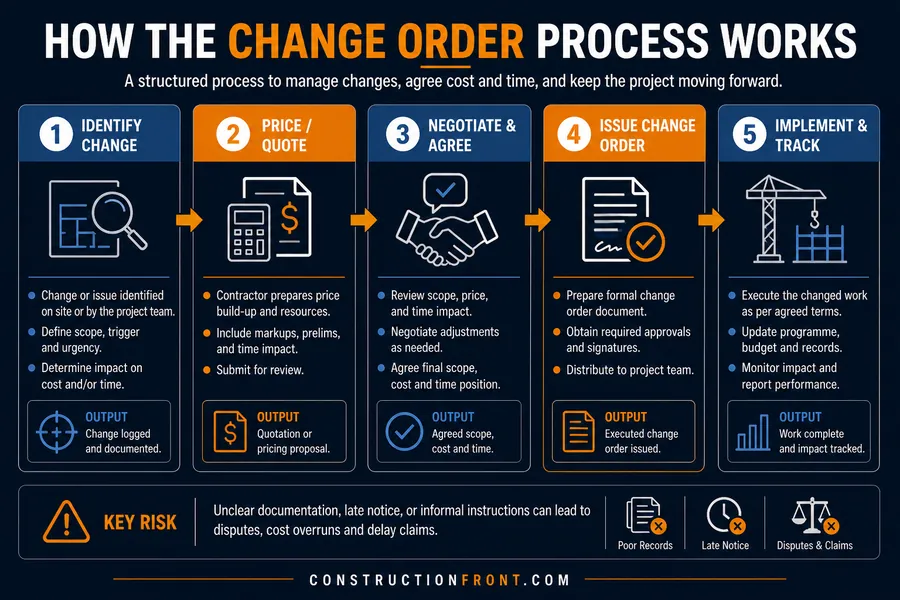
3. Approval and negotiation
The parties then negotiate scope wording, quantities, rates, mark-up, and the time position. This is where a proposed change becomes a true change order if agreement is reached.
If agreement is not reached but the work must continue, the team should not pretend it is already a fully agreed change order. It is usually better to document the instruction route clearly and leave valuation or time to be resolved through the contract mechanism, often by using a construction change directive.
4. Formal issuance
The formal document is then issued with the agreed scope and contract sum treatment, together with either:
- the agreed time adjustment, if the parties have settled it, or
- an express statement that time remains under review or reserved
That distinction matters. On many projects, the cost of the change can be agreed before the full programme effect is proven. The document should also align with the contract authority structure and state whether the adjustment is final, provisional, or partly reserved.
5. Implementation and record closeout
After issue, the project team still needs to manage the change in practice. That means:
- updating procurement and subcontract instructions
- revising cost reports and forecasts
- updating programme and progress records
- tracking actual implementation cost against the pricing assumptions
- recording whether the time position remains neutral, agreed, or still live
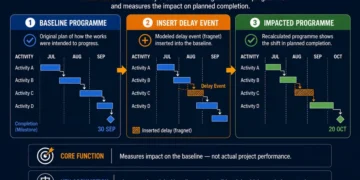
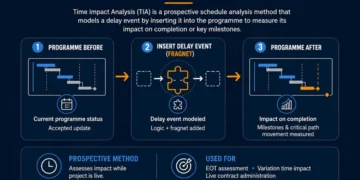
If delay consequences remain live, the team should connect the change record to time impact analysis, prolongation costs, and any relevant notice of delay record.
Types of Change Orders in Construction
Not all change orders arise for the same reason. The source of the change usually affects entitlement, valuation method, notice requirements, and programme risk.
The changes can typically be grouped in the following categories:
| Type | Description | Typical example | Commercial impact |
|---|---|---|---|
| Owner-initiated change | The owner changes scope, finish, quantity, layout, or sequence after award. | Changing lobby finishes from standard tile to imported stone. | Usually the clearest basis for additional cost and possible time treatment, subject to the contract valuation rules. |
| Design change | Issued because drawings, specifications, or coordination details are revised. | Revised steel connection details after shop drawing review. | Can affect procurement, rework, productivity, and sequence, particularly if the revision lands after fabrication or installation has started. |
| Unforeseen condition | Change caused by concealed or unexpected site conditions. | Rock excavation where the tender information suggested ordinary soil. | Often disputed on risk allocation, notice, and proof of the baseline assumption the tender was priced against. |
| Regulatory change | Change required by authority comments, code interpretation, or permit conditions. | Additional fire stopping required by the authority having jurisdiction. | May trigger debate over whether the original contract documents already required the work. |
| Constructive change | A change created by conduct, coordination, interpretation, or repeated direction without a clean formal order at the time. | Repeated direction to resequence work around late access or redesign. | Highest dispute risk because records are often incomplete and valuation becomes retrospective. |
How to Price a Change Order
Pricing is where a manageable change often becomes a dispute. The problem is usually not arithmetic. It is failing to price the full commercial effect of the change and failing to separate scope cost from time consequence.
Core pricing components
A proper change order valuation should consider five distinct layers.
1. Direct costs
These are the costs tied directly to the changed work itself:
- labour hours
- materials
- plant and equipment used on the changed work
- subcontract package adjustments
- testing, inspection, or commissioning directly linked to the changed work
- waste, abortive material, or removal where the change displaces completed work
2. Indirect costs
These are project support or execution costs caused by the change but not measured as part of the changed physical scope:
- additional supervision
- extra site management input
- temporary works support
- protection, access changes, and rehandling
- design coordination effort
- revised logistics, lifting plans, or trade interface management
3. Prolongation or time-related costs
These arise only if the change affects completion, critical path activities, or otherwise extends the contractor’s time-related exposure. They may include:
- extended site overhead
- staff and supervision extension
- extended plant hire or standby
- welfare, security, and temporary facilities
- project support and financing-related cost where contractually recoverable
This layer should not be folded invisibly into direct or indirect cost. It depends on proof of time impact, not just proof that extra work exists. In some contracts, delays and extension of time claims are dealt through different contract mechanisms and it is important to comply with delay notice requirements to preserve your rights.
4. Margin or mark-up
The contract may define allowable overhead and profit percentages or separate rules for self-performed work, suppliers, and subcontractors. If it does not, the parties need to agree the mark-up basis expressly rather than assume one percentage applies to every cost category.
5. Risk allowance
Some changes carry uncertainty that cannot be fully priced at the time of issue. A realistic allowance may be needed for:
- quantity uncertainty
- restricted access
- out-of-sequence working
- market pricing volatility
- partial design release
- uncertain interface with existing work
Risk allowance should not be used as a hidden contingency. It should be tied to identified uncertainty and described clearly.
Simple worked example: how to price a change order
Assume the owner changes 1,200 square feet of floor finish from standard tile to stone after the contractor has already procured part of the original material.
Step 1: Direct cost difference
- additional stone material: $22,000
- revised labour and handling: $8,500
- waste and cutting allowance: $1,500
- supplier cancellation or restocking on original tile: $2,000
Subtotal direct costs: $34,000
Step 2: Indirect cost impact
- extra supervision and coordination: $2,500
- revised shop drawings and approvals: $1,800
- access and protection adjustments: $1,200
Subtotal indirect costs: $5,500
Step 3: Prolongation or time-related cost
The imported stone extends the activity by 10 days on the critical path due to lead time and resequencing.
- site overhead extension: $6,000
- extended supervision and general conditions: $4,000
Subtotal time-related costs: $10,000
Step 4: Margin
If the contract allows 10% mark-up on the applicable changed work cost:
- 10% applied to $49,500 = $4,950
The contract should still be checked to confirm whether that 10% applies to all components equally or whether different rules apply to subcontractor or supplier cost.
Step 5: Risk allowance
If final wastage and handling remain uncertain, the parties may agree a limited allowance of $1,500 tied to that specific uncertainty.
Indicative change order value: $55,950
The commercial lesson is straightforward. If the contractor prices only the material difference and installation labour, the quotation misses coordination cost, programme effect, and likely overhead extension.
If the owner accepts a vague lump sum without asking how time was treated, the dispute has not been solved. It has just been deferred. Where the time effect is material, the pricing should sit beside a proper time impact analysis rather than being buried inside a single blended allowance.
Common Change Order Risks
Even where the parties agree that scope changed, there are still recurring risks.
Late or missing change orders
If the team carries out changed work before the paperwork catches up, the project can drift into retrospective valuation. That is where memory replaces records and positions harden.
Scope creep
Minor directions often accumulate into a material commercial change. Without tight descriptions, the parties lose sight of what sat inside the original contract and what was added later. On many projects, that drift starts with informal comments, emails, or RFIs that were never escalated through a proper variation request or equivalent change mechanism.
Disputes on valuation
This usually happens when the quotation does not explain the pricing basis, the owner reviews only the bottom-line figure, or the contract valuation mechanism is bypassed.
Poor documentation
A change order without drawings, take-offs, quotations, meeting references, and correspondence support is much harder to defend later. This is one reason disciplined construction claims and contract administration matters even on projects that are not yet in formal dispute.
Failure to capture time impact
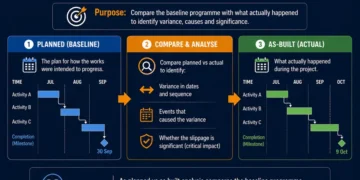
This is one of the biggest commercial errors. Extra work is priced, but the programme effect is ignored, reserved vaguely, or assumed to be included without analysis.
When the contractor later seeks time or prolongation costs, the owner may argue the change order settled everything already. Clear wording on whether time is agreed, neutral, or reserved is critical, and where delay develops the record should connect back to notice of delay requirements.
Mispricing or underpricing
Contractors sometimes underprice to secure approval and keep the project moving. Owners sometimes press pricing down before the actual sequence and disruption effect is understood. Both approaches commonly create a second dispute later.
The Contractors’ perspective
For contractors, the main discipline is to avoid treating the change order as just another estimate.
The quotation should identify the change against the contract baseline, explain the valuation basis, separate direct cost from indirect and time-related cost, state assumptions clearly, and deal with time expressly.
If the work is being instructed before agreement, the contractor should distinguish between proceeding with the work and agreeing the final amount. That distinction matters where the issue may later connect to extension of time claims or a notice of delay.
Contractors should also watch the early stages of change escalation. A site query may start as an RFI, develop into a revised detail, and then become a measurable change in scope, sequence, or access.
If that transition is not captured, entitlement weakens quickly. Construction Front’s guides on when an RFI becomes a variation and the contractor variation request process are useful reference points. Where the contract uses variation language rather than change order language, the team should still understand the wider change order framework.
Owners / Clients’ perspective
For owners and clients, the aim is not simply to resist cost growth. It is to control legitimate change before it becomes an uncontrolled claim.
That means defining who can authorise changes, requiring early cost build-ups, checking whether the quotation overlaps with base contract scope, and asking directly whether the contractor says time is unaffected, agreed, or still reserved.
If urgent execution is needed before full agreement, the better route is usually a clearly documented directive followed by formal valuation, rather than an ambiguous email instruction that leaves scope, price, and time uncertain. In that situation, the project team should understand when a construction change directive is more appropriate than an agreed change order.
Owners should also focus on consistency. If similar changes are valued on different bases across the same project, trust erodes and dispute risk increases. Strong administration is not anti-contractor or anti-owner. It is pro-clarity and pro-record. In practice, the best-performing teams treat change control as part of routine construction administration processes.
How to Draft and Issue a Change Order?
Use this as a working draft on live projects and adapt it to your contract form and project requirements.
CHANGE ORDER / VARIATION ORDER TEMPLATE
Project: [Insert project name]
Contract: [Insert contract title and reference]
Change Order No.: [Insert number]
Date: [Insert date]
Issued By: [Insert owner / contract administrator / architect / engineer]
Contractual Authority: Issued under Clause [X] / Article [X] of the Contract.
Status of Document: [Agreed change order / instruction pending valuation / agreed scope only / directive pending price]
Description of Change: [State clearly what work is added, omitted, substituted, relocated, or revised. Identify drawing numbers, specification sections, and locations.]
Reason for Change: [Owner requirement / design development / discrepancy / authority requirement / unforeseen site condition]
Valuation Basis: [Agreed lump sum / contract rates / derived rates / force account / provisional estimate] Amount: [Insert amount or "TBC subject to measurement"] Price includes: [...] Price excludes: [delay / disruption / acceleration unless stated]
Time Impact: [No effect / affects milestone only / under assessment / EOT to be submitted] The Contractor reserves the right to submit entitlement for extension of time and associated costs in accordance with the Contract.
Assumptions / Exclusions: [List all assumptions and exclusions]
Reservation of Rights: Except as expressly stated above, rights relating to valuation, time, disruption, prolongation, and other contractual consequences are not waived.
Signatures: Issued by: __________________ Received by: __________________ Date: __________________
The full toolkit includes the complete editable template plus worked examples across multiple variation and change order scenarios — FIDIC, NEC4 and bespoke contracts.
Practical Change Order Checklist
Use this checklist before issuing or accepting a change order.
- Is the change clearly different from the original contract baseline?
- Has the triggering event been identified and referenced?
- Is this an agreed change order, a directive, or only a request?
- Is the scope description precise enough to measure?
- Are revised drawings, sketches, take-offs, or instructions attached?
- Is the pricing basis explained, not just stated as a total?
- Have direct, indirect, and time-related costs been considered separately?
- Is the time position agreed, neutral, or expressly reserved?
- Does the contract define allowable mark-up or valuation rules?
- Are assumptions, exclusions, and provisional items stated clearly?
- Has the document been issued by a person with contractual authority?
- Have downstream records been updated, including the cost report, programme, and subcontract instructions?
Final Thoughts
A good change order does two jobs at the same time. It keeps the project moving, and it reduces the chance that the same issue returns later as a larger commercial dispute. That only happens when scope, valuation, and time are treated as one coordinated administration process rather than as separate site, estimating, and claims problems.
If your team is dealing with repeated change activity, it helps to step back into the wider construction claims and contract administration framework rather than treating each change as a standalone event. The strongest projects are usually not the ones with no changes. They are the ones that identify, classify, price, record, and close changes properly.
FAQ
What is a change order in construction?
A change order is the formal document that records an agreed change to the contract works, including the agreed price adjustment and either the agreed time effect or an express reservation of time for later determination.
What is the difference between a change order and a construction change directive?
A change order is usually used once the parties have agreed the change commercially. A construction change directive is typically used when the owner instructs the contractor to proceed before price, time, or both are fully agreed.
How do you price a change order?
A proper change order price should separate direct cost, indirect cost, time-related cost, contractual mark-up, and any clearly defined risk allowance. If the change affects the programme, the pricing should also be tested against prolongation costs and, where needed, time impact analysis.
Can a change order include an extension of time?
Yes. A change order can include an agreed extension of time, confirm that time is unchanged, or state clearly that the time position remains reserved. What matters is that the document says so expressly.
Is a variation order the same as a change order?
Not always. In some jurisdictions and contracts, especially under international forms, the broader variation order terminology is used instead of change order. The commercial effect depends on the contract wording and the project’s administration process.

Sources
- PDH Online, A Review of Change Order in Construction
- IEOM Society, Causes and Effects of Change Orders on Construction Projects
- International Journal of Applied Science and Technology, Effects of Variation Orders on Construction Performance
- Construction Front, What Is a Variation Order?
- Construction Front, How to Write a Variation Order
- Construction Front, Variation Request
- Construction Front, Contractor Variation Request Process
- Construction Front, When Does an RFI Become a Variation?
- Construction Front, Construction Change Directive
- Construction Front, Time Impact Analysis
- Construction Front, Prolongation Costs
- Construction Front, Notice of Delay
- Construction Front, Construction Claims and Contract Administration
Disclaimer: The articles on this website are for informational and educational purposes only and do not constitute legal or technical advice. While we strive to provide accurate and up-to-date information on construction law, regulations may vary by jurisdiction, and legal interpretations can change over time.