


Construction projects are known for their dynamic nature and numerous changes throughout their lifecycle. In this context, variation requests and variation orders are important in ensuring effective change control and contract management.
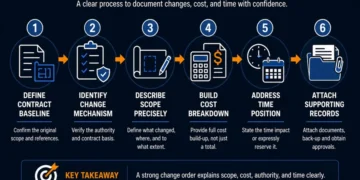
A Variation Request is a document by which one of the stakeholders seeks to proceed with changes usually related to the project’s scope, time, specifications, or any other contract terms. But how to successfully submit a variation request? You should follow these outlined steps:
- Step 1 – Understand the proposed change
- Step 2 – Review your Contract
- Step 3 – Gather all supporting documentation
- Step 4 – Estimate the impacts
- Step 5 – Write the Variation Request
- Step 6 – Submit the Variation Request
In this article, we will walk you through the key aspects of a variation request, provide further details for each step and how to submit one successfully.
What is a Variation Request?
A variation request, also referred to as a change request or variation order request, is a formal document submitted by one of the parties (usually either the Owner or the Contractor) involved in a construction contract to request changes to the original agreement.
It is a formal communication between the Contractor and the Owner to propose and assess potential variations and their respective impacts on the project’s budget, timelines, scope, etc.
Construction Contracts usually have specific clauses to deal with these modifications and a contractual notice is written to formalise the request.
The table below details some of the common changes that can occur throughout the development of a building, for example.
|
Variation Request Type |
Description |
Example |
|
Project’s Scope |
Requesting changes to the original project scope, including additions or omissions. |
Adding extra doors to a building. |
|
Technical Specifications |
Modifying the technical specifications of the project, such as materials, design elements, or performance requirements. |
Changing the type of flooring material to be used. |
|
Budget |
Requesting adjustments to the project’s budget, including cost increases or reductions due to the proposed changes. |
Requesting a revised budget due to unexpected expenses, such as inclement weather. |
|
Contractual Terms |
Requesting alterations to any other contractual terms, such as payment schedules, responsibilities, or dispute resolution processes. |
Amending the payment schedule to accommodate cash flow needs. |
|
Time for Completion (*refer to note below) |
Seeking modifications to the agreed-upon timeline for project completion, considering the impact of the requested changes. |
Requesting an additional month for project completion. |
Modifications to project’s timelines are typically addressed through specific requests called Extension of Time Claims. Read our detailed post on this specific topic:
Variation Request vs Variation Claim - What is the difference?
The terms variation requests and variation claims are often used interchangeably in the construction industry, but they are normally used in different circumstances.
Variation Requests are typically a proactive approach where one of the parties investigates a potential change to the original agreement conditions. A notice is submitted to the other party to assess and investigate the impacts associated with it.
Overall, it suggests open communication and collaboration, seeking to investigate potential impacts caused by the proposed change.
On the other hand, Variation Claims can be classified as a “reactive” approach, where one party (normally the Contractor/Builder) submit a notice to the other to seek compensation.
For example, a Contractor might raise a variation claim to seek time and cost recovery because of late release or approval of drawings which was the Client’s responsibility.

How to Successfully Submit a Variation Request?
The steps below are an overall guideline, and you should adjust them according to your contract requirements to ensure adherence.
- Step 1 – Understand the proposed change
- Step 2 – Review your Contract
- Step 3 – Gather all supporting documentation
- Step 4 – Estimate the impacts
- Step 5 – Write the Variation Request
- Step 6 – Submit the Variation Request
Following these step-by-step guidelines will help you write and submit a robust and well-prepared variation request, increasing the chances of obtaining approval for the proposed changes.
Let’s go into the detail of each step now.
Preserving your rights is not.
Step 1 - Understand the Proposed Change
It is essential to review the details of the proposed change thoroughly, such as understanding the nature of the change, why it is required, and how it would be implemented.
Another key point here is understanding whether new deliverables are required, if there are new requirements and additional work, and potential deviations to the program.
Step 2 - Review the Contract
Carefully review your construction agreement and investigate if you have the grounds or rights to claim the proposed change.
Key questions in this step are:
- What is the original scope of work?
- Why is this a variation request or claim under the contract?
- Is the change mandatory?
If you conclude that you are entitled to proceed with the request or claim, review and understand the contract procedures and provisions that should be followed, such as notice requirements and timelines within which they should be submitted.
In modern construction contracts, such as the NEC Contract Suite, notifications known as Early Warning Notices (EWN) are common practices to manage and address risks associated with potential emerging changes. Read our article on EWNs to further understand it:
What is an Early Warning Notice? (And How To Effectively Use them) – Click here
Step 3 - Gather the supporting documentation
Collect all necessary supporting documentation relevant to the proposed change, including drawings to detail a new or updated scope, updates to technical specifications, legal documents, and others.
A complete set of documents will provide robustness and increase the chances of success in your submission.
Step 4 - Estimate the Impacts
You should conduct a preliminary review to estimate the impacts of the proposed change, and consider aspects, such as:
- Costs
- Time
- Legal exposure
- And other relevant considerations to your contract
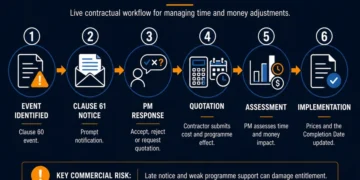
As previously discussed, both parties can initiate a variation request. Generally, owners request builders to price the request before implementing the change. Once they receive a quotation from the Contractor, they will assess the impacts and decide to proceed.
On the other hand, Contractors are known to be more “reactive” and use these dispositive to seek compensation for costs and time when they believe and tend to submit notices with a detailed impact breakdown (read again the section above – Variation Request vs Variation Claim – What is the difference?)
Step 5 - Write and Submit the Variation Request
Having completed the four steps above, now it is time to write your request or claim. We reiterate the importance of adhering to contract procedures, such as early warning notices and formatting.
Each agreement has its specifics, and you should pay close attention. Overall, you should:
- Refer to agreement’s relevant clauses
- Clearly articulate your request/claim and the rationale behind it.
- Detail the potential impacts caused by the change.
- Attach all relevant information (drawings, formal communications – i.e. minutes of meetings, emails, etc.).
- Ensure that any other requirement is incorporated into your notification.
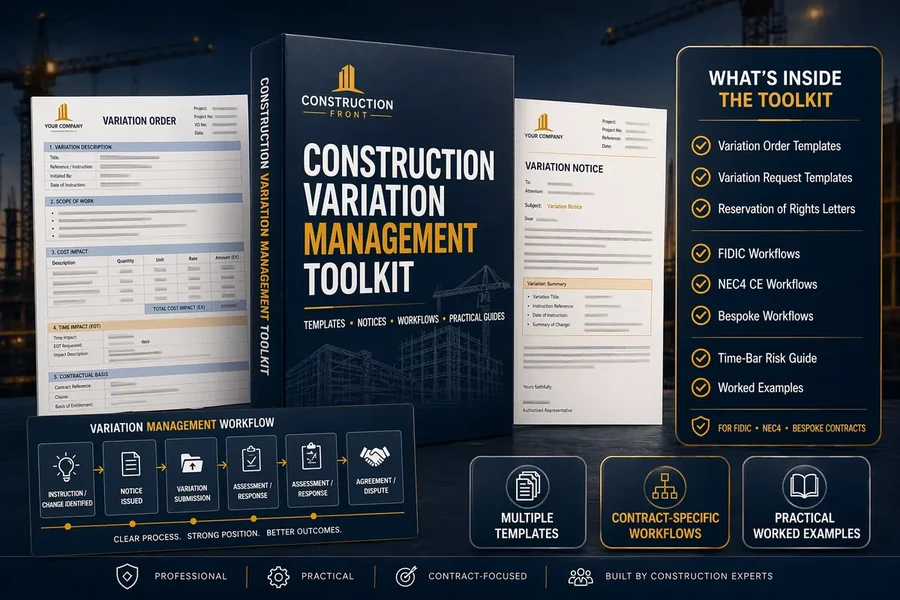
Make sure that response timelines are specified and follow up if no responses are received to avoid potential time-bar issues or that condition precedents are not met. A sample draft is provided below and detailed notices and templates guide can be found at our variation orders and claim management toolkit.
Time-bars are legal provisions in construction contracts that require claims to be submitted within a certain timeframe.
VARIATION REQUEST — NOTICE LETTER
Subject: Variation Request — [Brief Description of Change]
Dear [Owner's Representative],
The Contractor refers to the Agreement executed on [date] between [Owner] and [Contractor] for [Project Name].
Pursuant to clause [X], the Contractor hereby submits this Variation Request in relation to [brief description of the proposed change].
Basis of Entitlement:
The Contractor contends that the following circumstances give rise to entitlement under the Contract: [detail basis — scope change, latent condition, owner-caused delay, etc.]
Cost Impact: The Contractor's preliminary estimate of the cost impact is $[amount], subject to final assessment.
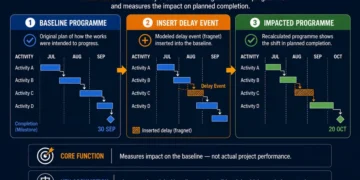
Time Impact: The Contractor advises that the proposed change may result in a delay of [X] days to the Date for Completion, subject to detailed programme analysis.
Notice Requirements: This notice is submitted within the timeframe required under clause [X]. The Contractor reserves all rights pending the Owner's response.
Regards,
[Contractor's Representative]
[Title · Date]
The complete template covers entitlement basis, cost and time positioning, and notice compliance.
FAQ
What is the difference between a Variation Request and a Variation Order?
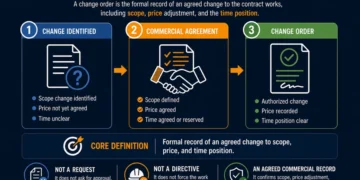
A variation request is a formal submission made one the parties to propose changes to the project scope, specifications, or contractual terms. It serves as a request for consideration and approval.
In contrast, a variation order is a formal direction by the Principal or Owner that authorizes the execution of the approved changes and usually details contract adjustments to the project’s time, cost, or contractual terms.
Conclusion
Variation requests and claims are inevitable on live projects. The difference between protecting your position and losing entitlement almost always comes down to how well the process is followed — the right notice, at the right time, with the right contractual basis.
Whether you are on the contractor or owner side, the steps above give you the framework. The toolkit gives you the documents to execute it properly.