

Claims & Contract Administration
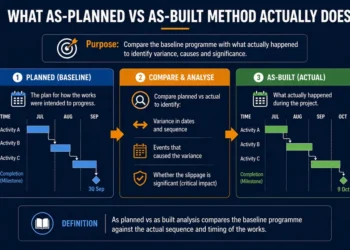
As-Planned vs As-Built Analysis in Construction: How the Method Works and When to Use It
Projects rarely drift off programme because of one isolated event. More often, the problem starts with late information, restricted access, design changes, procurement delay, slow approvals, productivity loss, or failed recovery efforts. When that happens, teams do not...
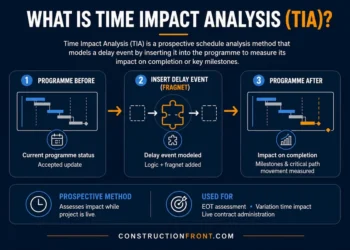
Time Impact Analysis (TIA) in Construction: What It Is, How It Works, and When to Use It
Delay analysis in construction is always a live issue on distressed projects. Once progress starts slipping, the argument usually moves quickly from programme updates to responsibility, extension of time entitlement, mitigation, and downstream cost exposure. Among the different...
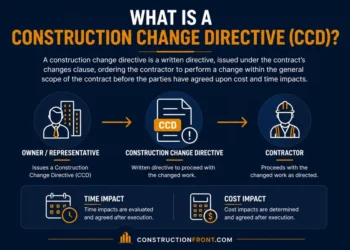
Construction Change Directive (CCD): What It Is, Contractor Rights, Process, and Entitlement Protection
A construction change directive is one of the most commercially sensitive documents on a project. It directs the contractor to proceed with changed work before the parties have agreed the final adjustment to contract price, completion dates, or both....
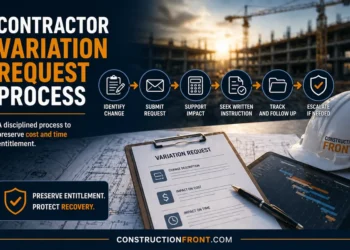
Contractor Variation Request Process: Step-by-Step Guide to Preserving Entitlement
A contractor variation request is not just a procedural step — it is the point where entitlement is either preserved or lost. On live projects, variation requests are frequently rejected not because the work is not valid, but because...
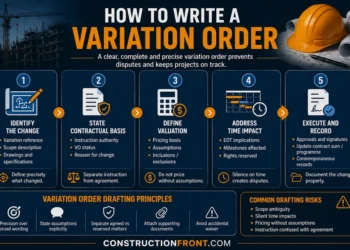
How to Write a Variation Order: Template, Key Clauses, and Common Mistakes
Knowing how to write a variation order matters because this document does more than record a change. It is the contract record that instructs or confirms a change to the works and states how scope, valuation, time impact, and unresolved...
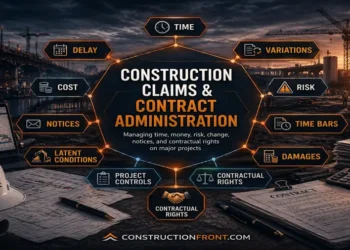
Contract Administration and Construction Claims Explained
Construction claims and contract administration are the systems project teams use to manage time, money, risk, change, notices, and contractual rights during a construction project. In practical terms, they matter because many disputes over delay, variations, latent conditions,...
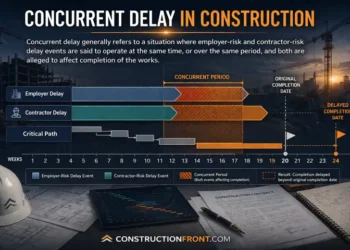
What Is Concurrent Delay in Construction?
Delay is one of the most disputed issues on construction projects, but some delay disputes are more difficult than others. One of the clearest examples is concurrent delay. The concept sounds straightforward at first, yet in practice it...
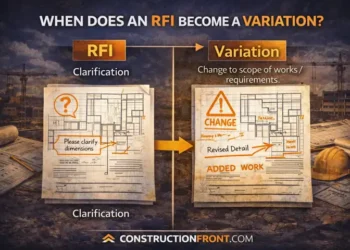
When Does an RFI Become a Variation? A Practical Construction Contract Guide
On most construction projects, an RFI is intended to be a request for clarification. In principle, that sounds straightforward. If the contractor needs more information, it asks a question, and the designer, superintendent, or employer responds. In practice, however, the line between clarification and change is often far less clear.That matters because an RFI may start as a simple request for information, but the response may go beyond clarification and alter the work, the sequence, the detail, the materials, or the design responsibility. When that happens, the issue may no longer be just an RFI. It may become relevant to variation, delay, cost entitlement, and disputes over who bears the risk under the contract.In simple terms, an RFI becomes a variation when the response changes the original contractual requirement, such as the scope of works, specification, sequence, design detail, or allocation of responsibility, rather than merely explaining what was already required. In this article, we explore how that happens in practice, why the distinction matters commercially, and how project teams can manage this issue more carefully. What is the difference between an RFI and a variation? An RFI, or Request for Information, is usually a formal written query raised when the contract documents, drawings, specifications, or site information do not provide enough clarity to proceed...
What Is an RFI in Construction? Why It Matters Under Construction Contracts
Construction projects are typically complex and require significant coordination between works on site, designers, consultants, subcontractors, and suppliers. More often than not, drawings are incomplete, details do not align, specifications leave too much open to interpretation, or the...
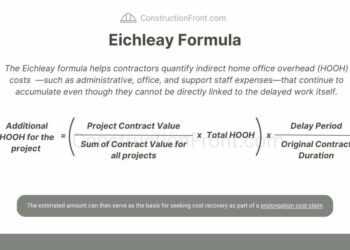
Eichleay Formula: What is it? How to use?
When construction projects face delays, determining how to fairly recover home office overheads often becomes a complex and contentious issue. One method frequently brought into this discussion is the Eichleay Formula—a recognised tool in some jurisdictions for quantifying...
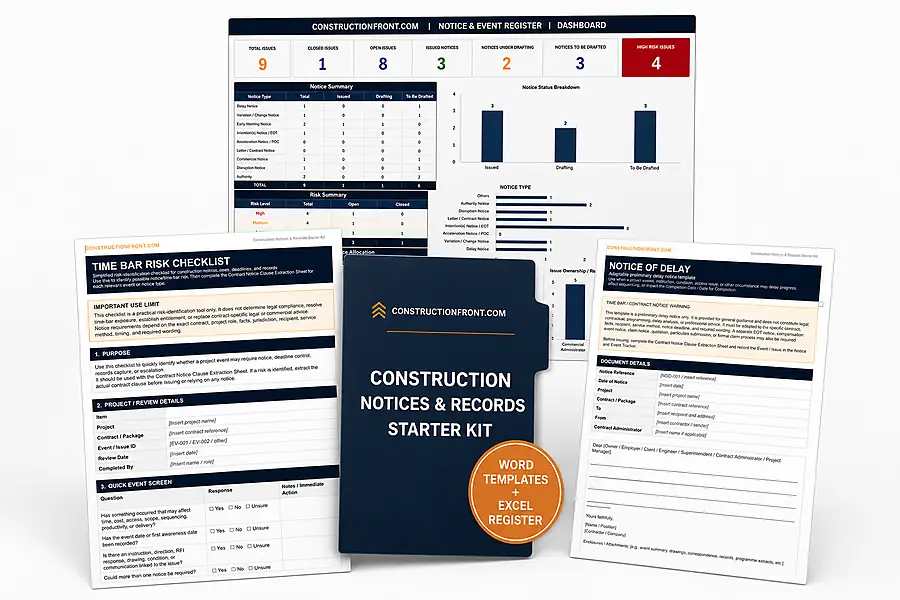
Construction intelligence, commercial insight and practical resources for infrastructure and energy professionals.