


• Home
  • News
  • Engineering
  • Knowledge Hub
  • Resources
No Result
View All Result
CF BRIEFING
Construction Front | Industry Knowledge Hub, News Portal
  • Engineering
  • News
  • Knowledge Hub
  • Resources
  • Contact Us
  • About us
Construction Front | Industry Knowledge Hub, News Portal
  • Home
  • News
  • Engineering
  • Knowledge Hub
  • Resources
No Result
View All Result
CF BRIEFING
Construction Front | Industry Knowledge Hub, News Portal
No Result
View All Result
Home Knowledge Hub Claims & Contract Administration
float in construction

What is the Float in a Construction Program? (Who owns it?)

Denys S. by Denys S.
May,2026
in Claims & Contract Administration, Knowledge Hub
0 0
0
322
SHARES
2.9k
VIEWS
Share on EmailShare on TwitterShare on LinkedinShare on Facebook

One crucial element in a construction contract is the agreed project baseline schedule/program, which outlines key milestones, completion dates, and commitments and facilitates resource planning, along with other contractual obligations.

Given the dynamic nature of construction projects, these programs undergo continuous updates to reflect the latest project’s status, providing both the contractor and owner with a clear view of its progress. A significant aspect embedded in project scheduling is the management of program float. But what exactly is the float in a construction project/program?

Float denotes the amount of time a specific task or activity within a project can be delayed without impacting the overall project timeline. This time buffer typically safeguards against unforeseen delays (i.e. latent conditions, inclement weather, etc.), allowing program adjustments without compromising the project’s completion date.

However, in certain instances, project delays may consume all available float, resulting in the contractor submitting extension of time claims and sparking disputes between the constructor and the owner. In such situations, a common question arises: who owns the float—the client or the contractor?

In this article, we will revisit the float concept, understand the existing float types, and answer the question of who owns the float – keep reading it.

What is the Float in a Construction Program? A brief overview

This section will briefly review the critical path method and the float concept within the construction industry and schedulling. 

Critical Path Method (CPM) and Float

The Float concept in project scheduling emerged in the mid-20th century with the development of methodologies like the Critical Path Method (CPM) and the Program Evaluation and Review Technique (PERT).

The CPM is a project management method that identifies a critical path, which is the sequence of tasks determining the shortest time needed to complete the entire project. In other words, the CPM identifies which activities can and cannot be delayed without impacting the overall construction program, categorizing them into two “buckets”: critical (with no float) vs non-critical (with time float).

CAPM Activity Type

Description

Critical Activities (without float)

These are tasks that must be completed on time to avoid delaying the entire project.

Any delay in a critical activity directly affects the project’s overall timeline

Non-Critical Activities (with float)

These tasks have some flexibility in their completion time (a.k.a. float) and won’t impact the overall construction schedule if they are delayed, provided they do not consume all the float available.

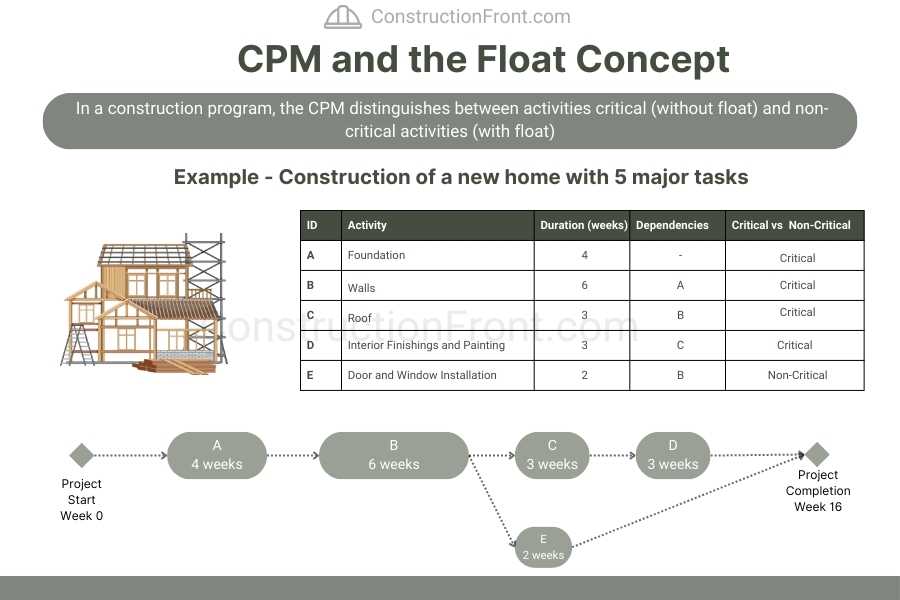
To illustrate the above and help further understanding, we detailed an example of the CAPM application and the float concept in constructing a new home in 16 weeks, as shown below. Note that Activity E (installing doors and windows) can potentially be delayed by up to 4 weeks without compromising the overall project completion schedule within 16 weeks.

CPM and Float Concept in construction schedulling

What is the float in a construction program?

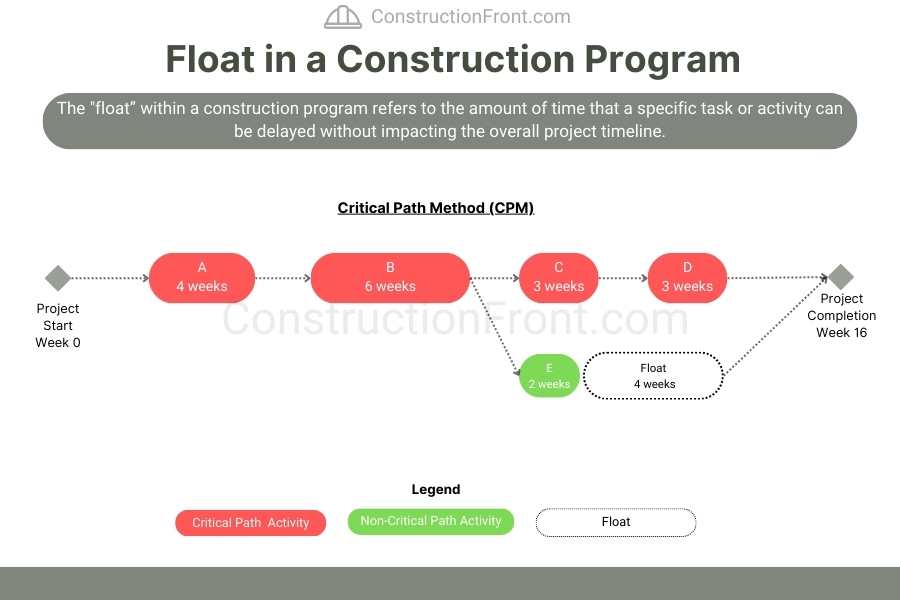
As briefly discussed in the introduction, in the construction industry, the “float” within a construction program refers to the amount of time that a specific task or activity can be delayed without impacting the overall project timeline.

For example, in the example shown in this article, Activity E has a float of 4 weeks, which means that it can finish as late as week 16 without causing delays for the new home construction. On the other hand, any delays in Activities A, B, C, and D will automatically impact the original project schedule, as they are in the critical path.

Float in a Construction Program

Types of Program Float

Typically, float is usually classified into the following types:

Float Type

Brief Description

Total Float

  • Represents the amount of time that an individual task or activity within a project can be delayed without delaying the overall project completion date.
  • It is the maximum duration an activity can be extended without affecting the project’s critical path

Free Float

  • The amount of time that a specific task or activity can be delayed without delaying the start of any subsequent dependent activities.
  •  It measures the flexibility of a particular task within the project schedule without impacting the overall project timeline.

Independent Float

  • It is the amount of time that an activity can be delayed beyond its early start date without impacting the project’s critical path.
  • Independent Float refers to the flexibility of a particular task or activity to be delayed without affecting the start of any other dependent or subsequent activity.

Interfering Float


  • Interfering Float occurs when the delay of a specific activity doesn’t affect the critical path but impacts another parallel path in the project network.
  • It measures the flexibility of a task to be delayed without affecting the overall project completion time but may influence the timing of activities on other parallel paths.

What is the Purpose of Float in the Program?

Float management in a construction program is essential to provide flexibility and resilience within the project schedule and ensure completion within the pre-established timelines. Some of the essential aspects of float management in a construction schedule include:

  1. Risk Mitigation: Float is a buffer against unforeseen delays or disruptions, such as inclement weather, material shortages, or unexpected challenges. It helps mitigate risks by allowing for adjustments without affecting the critical path.
  2. Optimizing Resource Allocation: Construction projects involve various resources, including workforce and equipment. Float allows project managers to allocate resources efficiently, prioritizing critical tasks while accommodating flexibility in non-critical activities.
  3. Adaptability to Changes: Construction projects often face changes, whether in design, scope, or unforeseen circumstances. Float provides the flexibility to adapt to these changes without causing a domino effect on the entire project schedule.
  4. Contingency Planning, Project Control and Monitoring: Project managers can effectively plan for contingencies by incorporating float into the schedule. For example, they can anticipate potential delays, allocate resources accordingly, and implement strategies to keep the project on track. Further, float management is an important and valuable tool for project control and monitoring, allowing the detailed tracking of critical tasks in the project. 
  5. Contractual Agreements: Clear understanding and management of float are essential in construction contracts. Delays may lead to claims for extensions of time, and float provides a basis for negotiating such claims while ensuring contractual obligations are met.

Suggested Reading: What is an Extension of Time Claim? 

Who Owns the Float in a Construction Contract?

Now that the float concept has been re-visited and its importance for construction projects, a common question might be raised: Who owns the float in a construction contract – the owner or the contractor?

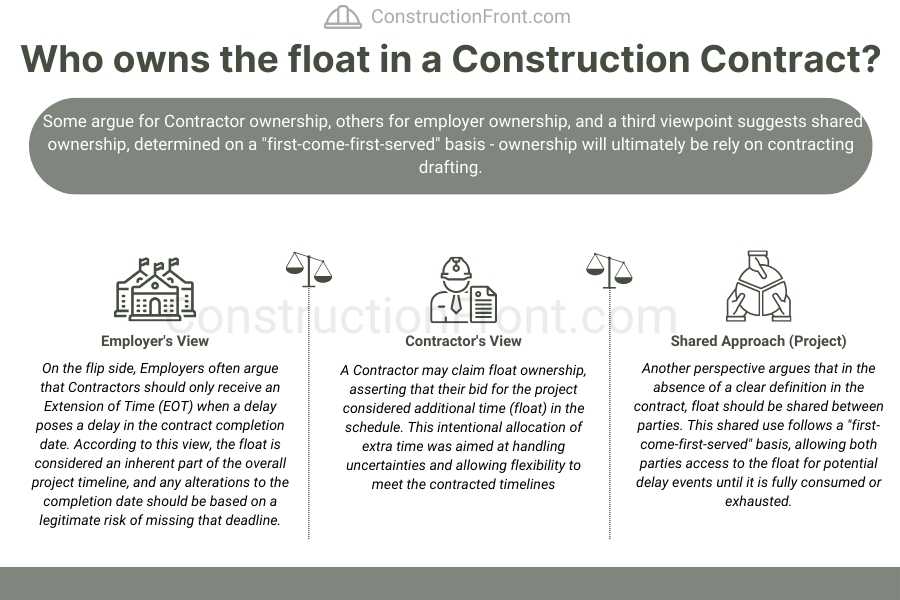
The float ownership under a contract has been the topic of intense debates within the construction industry over the last few decades – some people argue that it should belong to the Contractor, others sustaining that it belongs to the Principal (Client), and a third avenue stating that is belongs to the project (i.e. it should be shared between the parties on a “first-come-first-served” basis) – Let’s review each point of view in the next sections and come to a conclusion.

Who owns the float in a construction Contract
Who owns the float in a construction Contract?

Float Ownership - Contractor's View

According to the Delay and Disruption Protocol by the Society of Construction Law, a Contractor may sustain it has float ownership given that its offer to undertake the works was based on a schedule that allowed for additional time (float) to manage uncertainties and provide some flexibility to execute the project in the contracted timelines.

Float Ownership - Employer's view

Conversely, an Employer/Principal often contends that the Contractor is not entitled to an Extension of Time (EOT) unless the delay it caused jeopardizes meeting the contract completion date. In this perspective, the Employer, Client, or Principal asserts that the project inherently owns the float.

The argument is rooted in the notion that float is integral to the overall project timeline, and any adjustment to the completion date should only occur when there is a genuine risk of missing that deadline.

Float Ownership - Shared Approach (Project Owns the float)

Another school of thought sustains that, in the event there is no clear definition under the contract, the float should be shared between the parties and used on a “first-come-first-served” basis, meaning that float is this time contingency is available for potential delay events caused by both parties up to its total consumption (exhaustion).

Who owns the float in a construction contract, then?

Ultimately, the float ownership and resolution of extension of time claims will rely on how the contract and extension of time claim clauses are drafted under an existing agreement. The typical draftings are:

  • Contract Drafting Supporting float ownership by Contractor – Delay and Disruption Protocol by the Society of Construction Law, If the wording of the Extension of Time (EOT) clause states that an EOT will be granted whenever the Employer Delay causes the Contractor’s planned completion date to be later than it would have been without that delay, then total float may not be accessible for the benefit of the Employer in the case of delay caused that.
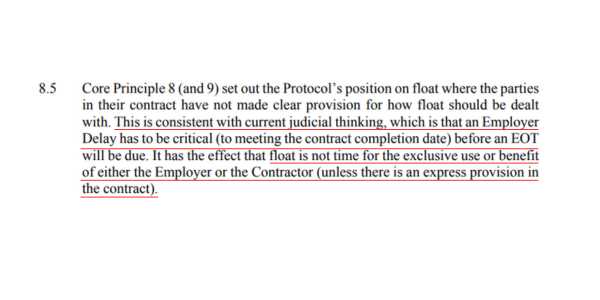
  • Contract Drafting supporting the shared ownership of the float (Project ownership) – When the language of the Extension of Time (EOT) clause specifies that an EOT will only be granted if delays caused by the Employer extend beyond the contract completion date or a specific milestone, it implies that total float must be exhausted before an EOT becomes applicable. In such cases, the prevailing perspective is that the both the Contractor and the Employer can use the float (refer to snippet from Delay and Disruption Protocol by the Society of Construction Law below)
Float ownership - Delay and Disruption protocol by SoCLA
Extract from the Delay and Disruption Protocol by the Society of Construction Law (source: https://www.scl.org.uk/)
denys s.

Author’s Note:

  • The critical difference between the first and second drafts is the words planned (indicating contractor’s ownership) and contract dates (indicating shared ownership). 
  • Unfortunately, sometimes contracts are silent or ambiguous about the float, creating uncertainty and increasing the likelihood of disputes.  

Float Ownership according to the AACE - Recommended Practice No. 29R-03 - Forensic Schedule Analysis

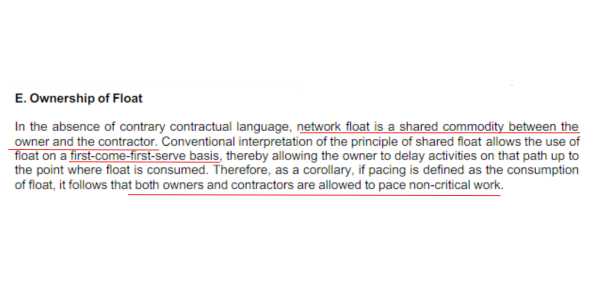
In its Recommended Practice No. 29R-03 – Foresinc Schedule Analysis, The Association for the Advancement of Cost Engineering (AACE) corroborates with the sharedapproach and states that unless otherwise stated in the contract, the float will be considered a shared commodity between the parties (see snippet below).

Float ownership by AACE - Recommended Practice No. 29R-03 - Foresinc Schedule Analysis
Recommended Practice No. 29R-03 - Foresinc Schedule Analysis (Source: web.aacei.org)
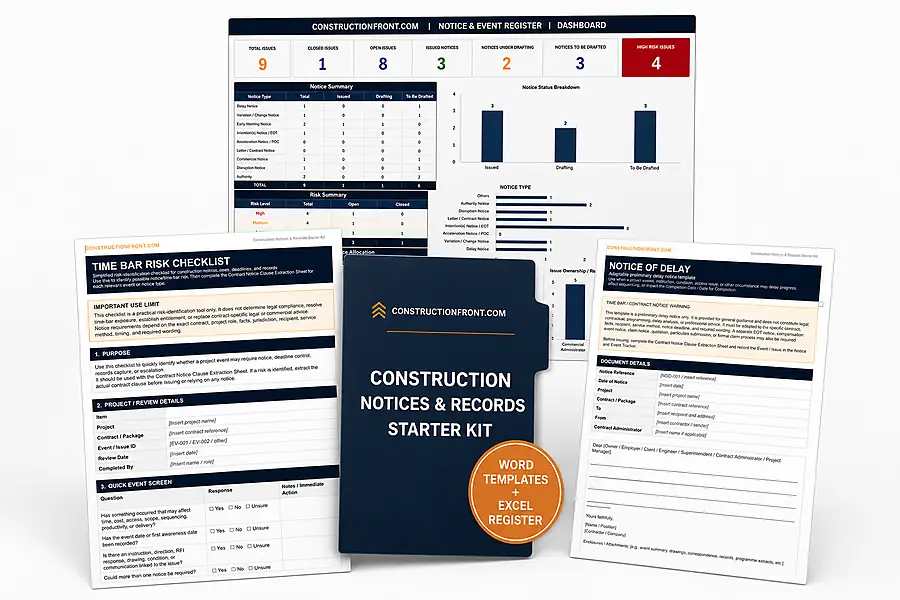
Construction Notices and Records Starter Kit
Notices and Records Starter Kit
Float disputes are won on programme records and timely notices. Not on theory.
Notice of Delay template, time-bar checklist, clause extraction sheet and event tracker. Built to keep the project record strong while the delay is still live across NEC4, FIDIC and bespoke contracts.
Get the Starter Kit →

Why is it important to own the Float?

Float ownership is of utmost importance in assessing extension of time claims and, more broadly, in commercial risk exposure under a construction agreement.

In the event of project delays, one party (i.e. contractors) might be required to compensate the other (employer) with liquidated damages under the contract if the project fails to reach completion under the contracted dates.

In some instances, apart from delay damages specified under the contract, employers might also require insurance to protect their interests, such as a Delay in Start-Up (DSU) insurance in EPC Contracts.

This type of coverage is designed to protect r project owners from financial losses resulting from delays in the commencement of operations or production. This insurance typically comes into play when a construction project or business faces delays due to unexpected events.

Suggested Reading: What is an EPC Contract? (Key Features, Examples, and Tips)

FAQ - Float in Construction Programs

What is the critical path in construction scheduling?

The critical path in construction scheduling is the sequential chain of tasks determining the shortest time required to complete a project. Activities on the critical path have no float, meaning delays in these tasks directly impact the overall project timeline.

What is the Relationship Between Critical Path and Float?

The relationship between the critical path and float in construction scheduling is intertwined. The critical path consists of tasks that, if delayed, would directly impact the overall project completion time (have “zero” float). In contrast, float represents the flexibility or slack in non-critical tasks that can be delayed without affecting the project’s timeline.

Ultimately, the critical path and float together give project managers a comprehensive understanding of task dependencies, allowing for effective scheduling, resource allocation, and risk management.

What is the Difference Between Float and Contingency?

Usually, the term float is associated with the time flexibility of individual tasks embedded in a construction program, which allows for adjustments without affecting the project’s overall timeline.

Conversely, contingency is typically associated with a proactive reserve to address broader uncertainties and risks that may impact the project in various ways (i.e. additional resources, budget/finds, time, etc.)

Need Help with Float Disputes and Delay Claims?

Access our notices and records starter kit or our detailed variation and claims toolkit below.

Who owns the float is argued later. Who kept the records decides the outcome.
Start with notices and records, or go straight to the full variation and claims workflow.
Construction Notices and Records Starter Kit
Start here
Notices and Records Starter Kit
Notice of Delay template, time-bar checklist, clause extraction sheet and event tracker. For teams managing live notices and programme records on active projects.
Get the Starter Kit →
Variation Order and Claims Toolkit
Go deeper
Variation and Claims Toolkit
Full variation workflows, worked examples, entitlement checklists and FIDIC/NEC4 drafting support for deeper claims work.
Get the Full Toolkit →
Sources

  • A COMPARISON OF FLOAT OWNERSHIP ISSUES FOR CONSTRUCTION PROJECTS BETWEEN TAIWAN AND CHINA (ntou.edu.tw) 
  • Delay and Disruption Protocol by the Society of Construction Law – UK

  • AACE ® International Recommended Practice No. 29R-03 FORENSIC SCHEDULE ANALYSIS TCM Framework: 6.4 – Forensic Performance Assessment | Reno Masr – Academia.edu
  • Preallocation of Total Float in the Application of a Critical Path Method Based Construction Contract
  • Utilization of Floats in Project Schedule Recovery -A Pilot Schedule Demonstration
  • Modeling measures of risk correlation for quantitative float management of construction projects

  • Reviewing Construction Schedule Float Management – The Open Construction and Building Technology Journal

  • Selecting a delay analysis method in resolving construction claims

Tags: Claims & Contract Administrationconstruction lawdelay analysisEOTscheduling
Previous Post

Fluor will be the EPCM Contractor for the World’s First Renewable Hydrogen-Based Integrated Steel Mill in Sweden

Next Post

Strabag awarded $255m DBF contract to deliver the second underground segment of the Eglinton Crosstown West Extension in Toronto

Denys S.

Denys S.

Denys Schwartz is a civil engineer and certified professional (PMP, CP3P, CAIA) with more than 15 years of experience in the construction industry, specialising in project development, project financing, procurement, contract administration, and dispute resolution for major infrastructure and energy projects. He holds a postgraduate degree in Corporate Finance and has worked on multibillion-dollar projects across Australia, Brazil, and other international markets.

Related Posts

nec4_compensation_event_process
Claims & Contract Administration

NEC4 Compensation Events: How to Notify Them, Protect Entitlement, and Common Commercial Risks

by Denys S.
May,2026
how_to_write_change_order_featured
Claims & Contract Administration

How to Write a Change Order in Construction: Step-by-Step Guide with Template

by Denys S.
May,2026
Change order infographic showing progression from identified change to commercial agreement and final formal change order including scope, price, and time position.
Claims & Contract Administration

Change Order in Construction: Meaning, Process, Pricing, Types, and Common Risks

by Denys S.
May,2026
Impacted as-planned analysis infographic showing baseline programme, inserted delay event (fragnet), and resulting impacted schedule with shift in planned completion.
Claims & Contract Administration

Impacted As Planned Analysis: What It Is, How It Works, and When It Fails in Construction Claims

by Denys S.
May,2026
Infographic showing as-planned vs as-built analysis comparing a baseline programme with actual project performance to identify variance and assess delay impact.
Claims & Contract Administration

As-Planned vs As-Built Analysis in Construction: How the Method Works and When to Use It

by Denys S.
May,2026
Next Post
Strabag awarded $255m DBF contract to deliver the second underground segment of the Eglinton Crosstown West Extension in Toronto

Strabag awarded $255m DBF contract to deliver the second underground segment of the Eglinton Crosstown West Extension in Toronto

JV led by Turner and Walsh Group to deliver the new Terminal F Concourse at DFW Airport

JV led by Turner and Walsh Group to deliver the new Terminal F Concourse at DFW Airport

Sao Paulo-Campinas Intercity Train PPP goes ahead for auction in Brazil

Sao Paulo-Campinas Intercity Train PPP goes ahead for auction in Brazil

Leave a Reply Cancel reply

Your email address will not be published. Required fields are marked *

I agree to the Terms & Conditions and Privacy Policy.

Stay Connected

Featured Resources

Notice Control — Templates + Checklists + Event Tracking Tool
Construction Notices and Records Starter Kit
Construction Notices & Records Starter Kit
Practical notice templates, checklists and an Excel register for tracking notices, events, deadlines and supporting records.
Access Starter Kit →
Variation Management — Templates + Workflows
Construction Variation and Claims Toolkit
Variation Order & Claims Toolkit
20+ templates, notice letters and workflows for FIDIC, NEC4 and bespoke contracts — contractor and owner side.
Access Variation Toolkit →
LinkedIn

Construction intelligence, commercial insight and practical resources for infrastructure and energy professionals.

Site Map

  • Home
  • News
  • Engineering
  • Knowledge Hub
  • Resources
  • Contact Us
  • About us

Recent Posts

The OL32 Skavsta package will form part of Sweden’s East Link railway programme, a new double-track corridor between Järna and Linköping designed to increase rail capacity and improve regional con

Feronord Consortium Selected for €1.2 Billion OL32 Skavsta Rail Contract in Sweden

May,2026
Skanska wins $1.06 billion MBTA bridge and rail upgrade contract in Massachusetts

Skanska wins $1.06 billion design-build contract for MBTA’s North Station Draw One project in Massachusetts

May,2026

Copyright © 2023 ConstructionFront.Com | Affiliate Disclosure | Privacy Policy | Terms & Conditions

Welcome Back!

Login to your account below

Forgotten Password?

Retrieve your password

Please enter your username or email address to reset your password.

Log In
No Result
View All Result
  • Home
  • News
  • Engineering
  • Knowledge Hub
  • Resources

Copyright © 2023 ConstructionFront.Com | Affiliate Disclosure | Privacy Policy | Terms & Conditions

This website uses cookies. By continuing to use this website you are giving consent to cookies being used. Visit our Privacy and Cookie Policy.

ConstructionFront.com - Newsletter!

Stay at the front of the construction industry with the latest news, market trends, and project insights — delivered by ConstructionFront.com

Name
Enter your email address

Thanks, I’m not interested

Privacy Policy - Terms and Conditions