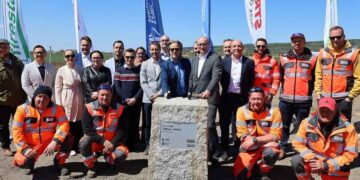


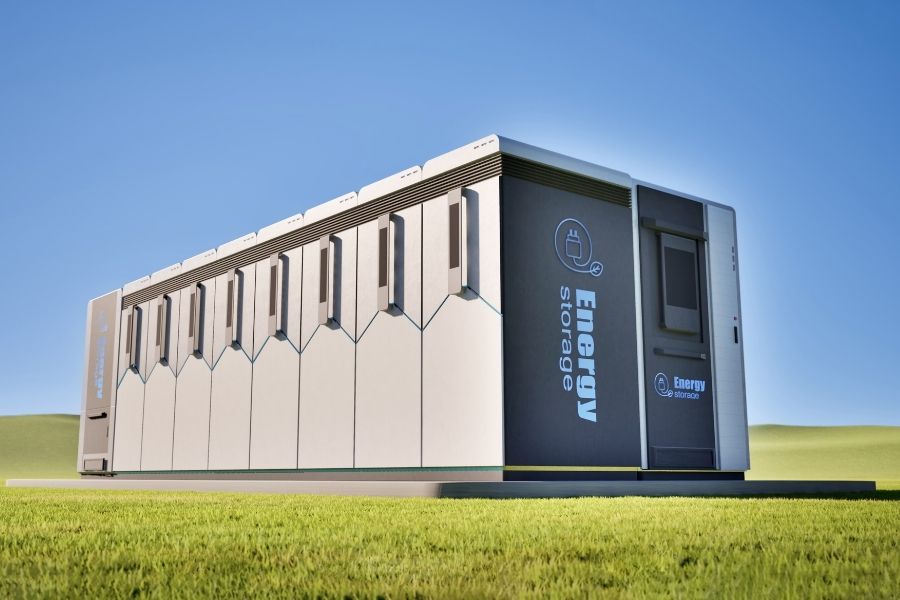
Copenhagen Infrastructure Partners has commenced construction of the 300 MW / 1,500 MWh Patache battery energy storage system in Chile after issuing Final Notice to Proceed (FNTP) under the project’s main supply and construction contracts. The project is being advanced through CIP’s Growth Markets Fund II.
The milestone shifts Patache from late-stage development into full execution and adds another large-scale battery asset to the global storage pipeline. It also underlines how a formal notice to proceed has become one of the most meaningful commercial triggers on utility-scale BESS projects.
Patache BESS – Project Background
According to Copenhagen Infrastructure Partners, Patache is located near Iquique in northern Chile, close to strong solar generation, existing transmission infrastructure, and large industrial demand centres. The project is designed to store surplus daytime renewable electricity and shift it into higher-value evening demand periods.
That operating logic is central to the investment case. In solar-heavy markets, large batteries are increasingly being developed to reduce curtailment in renewable energy, support grid balancing, and improve the utilisation of transmission assets that might otherwise be underused outside peak solar hours. Patache sits squarely in that category.
The project also builds on CIP’s earlier Arena BESS project in Chile’s Antofagasta region. CIP said Arena, a 220 MW / 1,100 MWh battery project, has already completed construction and is now delivering electricity to the grid. From a delivery standpoint, that matters because Patache is not being advanced as a first-of-kind entry into storage for the sponsor. It follows a live operating reference in the same market.
Patache BESS project FNTP – Milestone details
CIP said it has issued Final Notice to Proceed for Patache, authorising the start of construction activities under the project’s main supply and construction contracts. CIP did not disclose contract values or identify the contractors/suppliers, but it does make clear that the project has now moved into execution under the principal delivery packages.
The project is structured as a standalone 300 MW / 1,500 MWh BESS investment through Growth Markets Fund II, with a group of co-investors holding a minority stake. In practical terms, the issuance of FNTP is the key commercial event here. It marks the point at which development work, procurement planning, and pre-construction activity convert into active delivery under binding contract arrangements..
Contract & Procurement Context
Although CIP has not disclosed the exact contract structure in this release, projects of this scale are often shaped by similar issues seen on large EPC contracts, Balance of Plant (BoP) contracts, and storage packages where delivery risk is split across equipment, electrical works, grid connection, and site infrastructure. That is where disciplined construction claims and contract administration becomes important, particularly if sequencing or interface assumptions shift after execution has started.
Patache BESS – Delivery considerations
Storage projects of this scale are increasingly being delivered as strategic infrastructure rather than secondary renewable add-ons. The technical challenge is not limited to battery supply. It includes civil works, substation and connection infrastructure, commissioning coordination, and operational integration into the wider power system.
In Patache’s case, the location near major solar resources and transmission infrastructure increases the value of the project, but it also raises the importance of schedule discipline and interface control. Large batteries only deliver their intended system value when generation patterns, grid access, and construction timing are aligned closely enough to support commercial operation on time.
Global BESS delivery outlook
Patache reinforces a broader global pattern in battery storage delivery: utility-scale BESS is increasingly being treated as core infrastructure rather than as a niche support technology. As renewable penetration rises across multiple markets, batteries are being used to shift output into peak demand windows, reduce curtailment, and improve the utilisation of existing grid infrastructure.
That pattern is visible across CIP-backed projects in other regions, including two 500 MW BESS projects in Scotland and the 240 MW / 960 MWh Summerfield BESS project in Australia. It can also be seen more broadly in projects where storage is being paired with PPAs, renewable build-outs, and transmission-constrained systems.
The common thread is that battery projects are now being advanced through increasingly formal development and execution gates. FID, notice to proceed, procurement release, and construction start all carry real commercial significance.
For developers, contractors, and investors, that marks a clear shift: utility-scale BESS is no longer a side market. It is becoming a mainstream infrastructure class with larger project sizes, tighter delivery models, and a growing role in power system expansion.
Related Articles and News
- Copenhagen Infrastructure Partners (CIP) reaches FID for two 500MW BESS in Scotland
- Copenhagen Infrastructure Partners (CIP) Begins Construction on 240 MW / 960 MWh Battery Energy Storage System in Australia
- Notice to Proceed in Construction: What is it?
- Curtailment in Renewable Energy Projects: What is it?
- Balance of Plant (BoP) Contract: What is it? How it Works?