
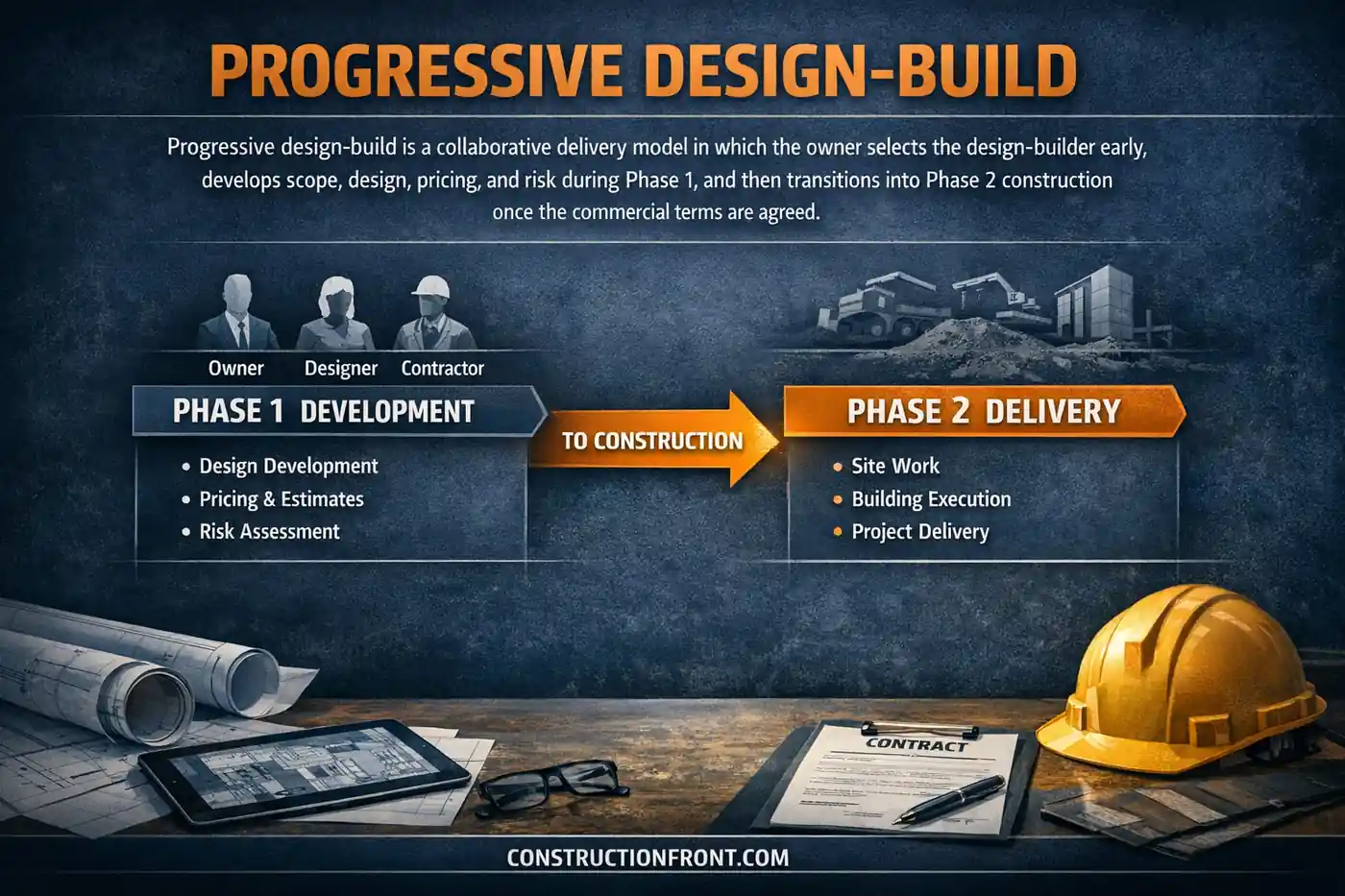

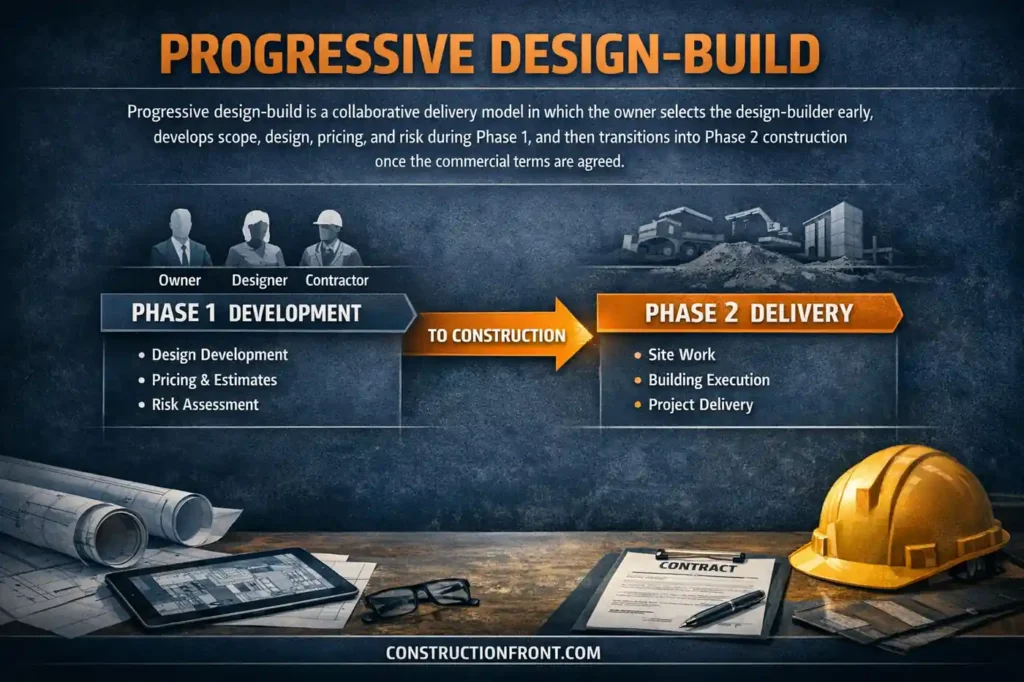
Progressive design-build is a project delivery method in which the owner selects a design-builder early, works collaboratively with that team during a development phase, and only finalises the full commercial commitment for delivery once the design, scope, price, and risk profile are sufficiently developed.
In practical terms, it is a way of combining the integration benefits of design-build with a more collaborative and progressive approach to pricing, risk resolution, and scope definition before full construction commitment. That is why progressive design-build has gained traction on complex infrastructure, transit, water, and major building projects.
Owners are often attracted to it when they want early contractor involvement, stronger constructability input, more transparent cost development, and better control over scope evolution before locking into a final guaranteed price or lump sum. For contractors and designers, it can create a better environment for collaboration, innovation, and risk identification than a traditional hard-price procurement run too early.
This guide explains what progressive design-build is, how it works, how it compares with traditional design and construct contracts, where it overlaps with ECI contracts, and why it is increasingly used on complex projects where early collaboration matters more than forcing a final price too soon.
What does progressive design-build mean?
At its core, progressive design-build means the owner does not procure the full project on a fully fixed commercial basis at the very start. Instead, the owner selects a design-builder early, usually based on qualifications or best value, then works with that team during an initial phase to develop the design, refine scope, improve constructability, test risks, and build pricing progressively.
That basic structure is reflected clearly in the paper Effective Tools for Projects Delivered by Progressive Design-Build Method, which describes progressive design-build as a method where the owner procures the design-builder primarily on qualifications or best value without a final price and schedule commitment at the point of selection. The same paper explains that the “progressive” element refers to the iterative development of both design detail and construction cost as the project moves forward.
The later literature review by Alazzam, Celoza, and Molenaar, Progressive Design-Build Opportunities and Challenges: A Literature Review, makes a similar point, describing progressive design-build as a flexible, collaborative, and transparent method with two main phases: a pre-construction phase and a construction phase.
In simple terms, progressive design-build is not just “design-build with more meetings.” It is a distinct commercial and procurement approach. The owner brings the design-builder in early, develops the project jointly, and then decides whether to proceed into full delivery on the agreed commercial terms.
How progressive design-build works?
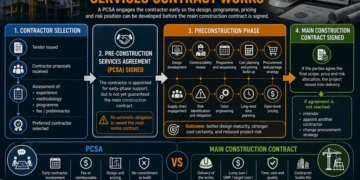
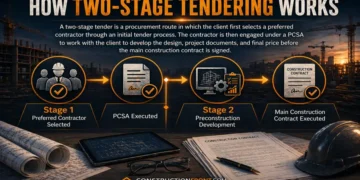
Progressive design-build is usually structured in two main phases. That two-phase format is one of its defining features and one of the main reasons it is used on more complex work.
| Phase | Main purpose | Typical outputs |
|---|---|---|
| Phase 1 | Collaborative development and preconstruction | Scope definition, preliminary design, risk review, pricing development, schedule refinement |
| Phase 2 | Final design, construction, commissioning, and handover | Final contract price or GMP, final design, delivery of the works |
During Phase 1, the owner and design-builder work together to define and validate the project more fully. According to Adamtey and Onsarigo, this phase commonly includes budget-level design development, preconstruction services, constructability review, progressive estimating, and negotiation of the final Phase 2 commercial terms. The 2025 literature review also frames Phase 1 around project goals, scope, budget definition, preliminary design, early estimating, and engineering review.
In procurement terms, the progressive design-build procurement process often starts with qualifications-based selection or best value procurement rather than a fully priced lump-sum competition. Owners commonly shortlist teams, run interviews or collaborative workshops, assess approach and capability, and then negotiate a Phase 1 preconstruction services agreement before moving toward Phase 2 pricing and delivery.
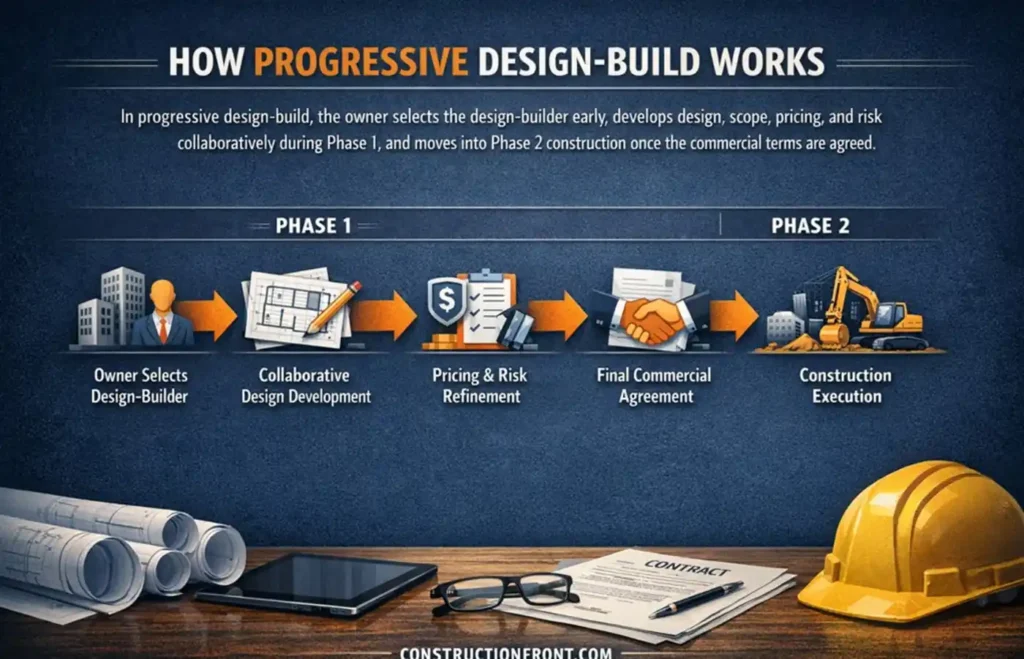
Once the design reaches a sufficient level of maturity, the design-builder submits its commercial proposal for Phase 2. The Alazzam paper notes that this often happens when the design is around 40% to 60% developed, though the precise point will depend on the project.
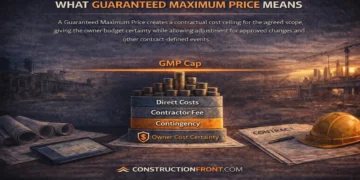
The Guaranteed Maximum Price (GMP) is the maximum price the owner will pay for Phase 2 delivery, subject to agreed change mechanisms and contractual adjustments. If the parties agree on price, scope, and risk allocation, the project moves into Phase 2. If they do not, the owner may use what is often called an “off-ramp” right and take the project in a different direction.
That off-ramp feature is commercially important. It means the owner is not always forced to proceed with the same design-builder into the construction phase if the commercial outcome is not acceptable.
What makes progressive design-build different from traditional design-build?
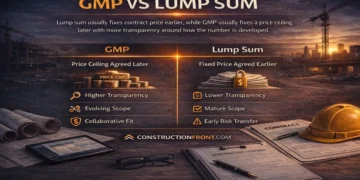
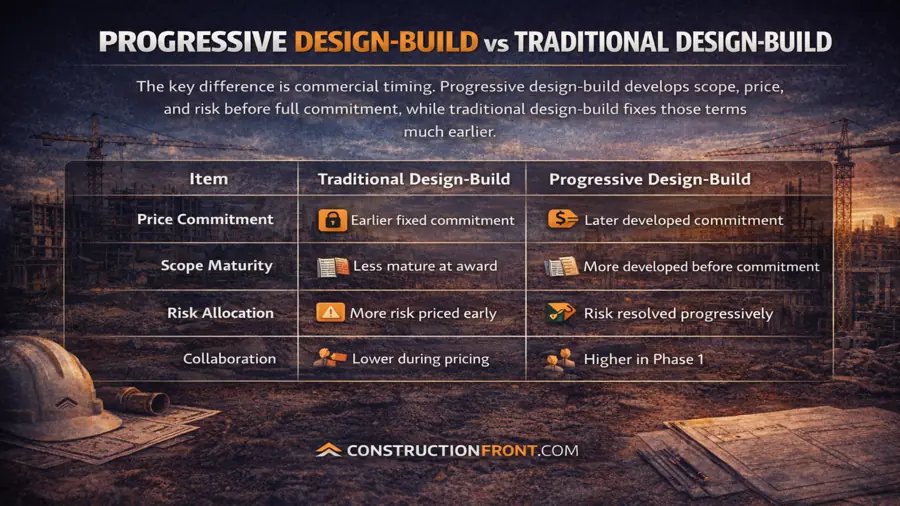
Traditional design-build usually asks the market to price a substantial part of the risk much earlier. That can work well where the owner has a mature scope, the project is sufficiently defined, and the market can reasonably absorb design and construction risk from the outset. But on more complex projects, early hard pricing can lead to inflated risk allowances, design conservatism, or later commercial friction if too much uncertainty was pushed downstream too early.
Progressive design-build changes that commercial sequence. Instead of locking the design-builder into a full delivery price at the start, it allows the owner and design-builder to develop the scope, price, and risk allocation together before final commercial commitment. Adamtey and Onsarigo describe this as one of the core distinctions between progressive design-build and standard design-build, especially where design-builder selection occurs without final project price and schedule commitment at the selection stage.
The 2025 literature review adds another useful distinction: progressive design-build gives more room for negotiation flexibility, open-book pricing, and equitable risk allocation during the early phase, whereas traditional design-build tends to shift more pressure into the initial procurement event. That difference matters commercially because it can change how contingency is carried, how value engineering is approached, and how realistic the final delivery price actually is.
Why owners use progressive design-build?
Owners typically use progressive design-build when project complexity is high, scope maturity is still evolving, or early contractor input is likely to materially improve delivery outcomes. That is especially relevant on transport, water, industrial, aviation, and major public infrastructure projects where design, access, constructability, stakeholder coordination, and procurement risk are all closely intertwined.
Adamtey and Onsarigo identified early contractor involvement, progressive estimating, open-book pricing, owner collaboration, and improved innovation as major advantages of this procurement mode. The Alazzam literature review similarly highlights enhanced cost and schedule certainty, more equitable risk allocation, greater negotiation flexibility, and reduced claims and disputes as key opportunities associated with progressive design-build.
From a practical perspective, owners are often looking for three things at once:
- better constructability input before price is locked in
- more realistic cost development for complex scope
- a stronger commercial environment for resolving and managing risk early rather than arguing about it later (and therefore minimizing issues around variations, extension of time claims, liquidated damages, etc)
That combination can make progressive design-build particularly attractive where a project is too complex for a clean early lump sum, but the owner still wants to preserve a path to a clear Phase 2 delivery contract.
Why contractors and designers may prefer it?
Progressive design-build can also be attractive to design-build teams because it reduces the need to price large amounts of uncertainty too early, such as latent conditions. On traditional hard-bid design-build procurements, teams may feel pressure to carry substantial contingencies for incomplete scope, unresolved interfaces, or immature owner requirements. That can make bidding expensive, make pricing less competitive, and create pressure for defensive commercial behaviour later.
Under progressive design-build, the design-builder has more room to work with the owner to refine the design, identify risks, sequence packages sensibly, and build the commercial position progressively. Adamtey and Onsarigo note that this can support innovation, better package-level pricing, and more active risk management as the design evolves. The Alazzam literature review also connects the model to reduced claims and disputes, which is commercially significant in its own right.
That said, the model is not automatically easier for contractors. It requires strong preconstruction capability, disciplined collaboration, pricing transparency, and the ability to operate in a more open-book environment than some teams may be used to.
What Is Open-Book Pricing and the Off-Ramp in Progressive Design-Build?
Two of the most commercially important features of progressive design-build are open-book pricing and the off-ramp.
Open-Book Pricing
According to Adamtey and Onsarigo, progressive estimating and later GMP negotiation are central to the method. They explain that open-book pricing allows the owner to see how costs are being developed, including contingencies and package-level pricing logic, rather than simply receiving a black-box lump sum. This does not eliminate commercial tension, but it changes the nature of it. The conversation becomes less about defending a fixed number formed in isolation and more about jointly understanding how the number is being built.
Off-ramp
The off-ramp right is just as important. The Alazzam literature review describes it as the owner’s ability to step away after Phase 1 if cost or scope agreement cannot be reached. Commercially, that changes the tone of Phase 1. It creates an incentive to resolve scope, risk, and pricing in a way that is credible and acceptable to both parties, because there is no guaranteed automatic conversion into Phase 2.
For owners, that offers leverage and protection. For design-build teams, it creates both opportunity and risk: the opportunity to shape the project early, and the risk that Phase 1 effort may not convert into full delivery if agreement breaks down.
What Types of Projects Use Progressive Design-Build?
Progressive design-build tends to work best on projects where early collaboration creates real value. That usually means projects with one or more of the following characteristics:
- complex interfaces
- evolving scope or stakeholder requirements
- constructability-sensitive design
- major phasing or access constraints
- high public or operational impact
- significant procurement or supply chain risk
- a strong need for owner participation during design development
The literature supports that. Adamtey and Onsarigo describe progressive design-build as particularly useful where early contractor involvement can improve constructability and where owner collaboration during design is beneficial. The Alazzam paper highlights its value on complex projects where risk transfer, insurance, claims management, and stakeholder alignment are difficult to manage through more rigid procurement structures.
That is one reason the model appears frequently on complex transit and civil infrastructure work. Construction Front has already covered several real-world examples, including the Ontario Line Pape Tunnel and Underground Stations package, the Brent Spence Corridor Project, and the QEW Skyway Twinning Project. Those projects illustrate why the method is often chosen where technical complexity and stakeholder coordination make early collaboration especially valuable.
Main advantages of progressive design-build
A practical summary of the key advantages looks like this:
| Advantage | Why it matters in practice |
|---|---|
| Early contractor involvement | Improves constructability, sequencing, and packaging decisions |
| More collaborative design phase | Helps owner and design-builder align before full commitment |
| Progressive cost development | Reduces the need to fix price too early |
| Open-book pricing | Improves transparency around cost build-up and contingencies |
| Better risk identification | Allows risks to be surfaced and negotiated earlier |
| Potentially fewer downstream disputes | Reduces mismatch between scope maturity and contract commitment |
| Off-ramp flexibility | Gives the owner an exit if Phase 2 terms are not acceptable |
Adamtey and Onsarigo specifically point to enhanced owner control of scope, quality, price, and schedule decisions, as well as innovation and earlier risk identification. The Alazzam literature review reinforces that with findings around cost and schedule certainty (reducing risks of project excessive prolongation), equitable risk allocation, negotiation flexibility, and reduced claims and disputes.
From a commercial standpoint, the biggest benefit may simply be timing. Progressive design-build allows difficult conversations about scope, risk, and price to happen while the project is still flexible enough to respond.
Main challenges and drawbacks
Progressive design-build is not a cure-all. It has real challenges, and the sources are clear on that.
Adamtey and Onsarigo identify concerns around the perceived lack of price competition at the initial selection stage, the owner’s need to remain meaningfully engaged in the design phase, and legislative or procurement constraints for public owners. The 2025 literature review adds other recurring challenges, including legislative restrictions, lack of owner education, team integration difficulties, and lack of industry interest in some markets.
From a practical project-delivery perspective, the main challenges usually include:
- owners not being ready for the level of engagement the model requires
- unclear governance during Phase 1
- weak alignment between technical and commercial decision-making
- poor execution of open-book pricing
- unrealistic expectations about how much risk can truly be retired before Phase 2
- public procurement frameworks that are not well suited to qualifications-led early selection
- disputes if the parties fail to agree on GMP or final Phase 2 terms
In short, progressive design-build works best when the owner actually wants collaboration and has the capability to participate in it. If the owner really wants to transfer risk early and step back, a more conventional design-build or D&C model may be a better fit.
Commercial and contractual implications
This is where progressive design-build becomes especially relevant for Construction Front readers. The model is not just a procurement label. It changes the timing of risk transfer, the development of price certainty, and the contractual relationship between owner and design-builder during the early phase of the project.
Risk allocation
One of the main selling points of progressive design-build is that risk can be identified and negotiated progressively rather than being forced into a single early lump-sum event. That can produce a more realistic commercial outcome, but only if the parties are disciplined about how risks are surfaced, discussed, and priced. The Alazzam paper explicitly links the method to more equitable risk allocation, which is one of the strongest reasons sophisticated owners use it.
Claims and change exposure
Adamtey and Onsarigo suggest that the extensive collaboration and progressive scope development in Phase 1 can reduce later scope changes and variation orders. The 2025 literature review also identifies reduced claims and disputes as one of the opportunities associated with the method. That does not mean progressive design-build eliminates claims, which in some cases might not be expected during It means the model can reduce one common source of claims: locking in price and risk too early against immature design.
Price certainty versus pricing pressure
Progressive design-build often produces better-informed price certainty, but later than some owners may be used to. That is an advantage on complex work, but it can also create political or governance pressure where an organisation wants a headline price too early. The commercial question is not whether certainty exists, but when and on what basis it is achieved.
Owner capability
The model places more responsibility on the owner during Phase 1 than some people assume. The owner needs to make decisions, engage on scope, review pricing logic, and understand when to continue and when to use the off-ramp. If the owner lacks that capability, the method can underperform even if the contractual form looks attractive on paper.
A simple practical example
Imagine a transit authority is developing a major underground station package in a dense urban area. At procurement stage, the concept design is good enough to identify the project’s objectives and main interfaces, but not mature enough for a clean early lump-sum design-build award without significant pricing contingency. The authority chooses a progressive design-build model and selects a design-builder based on qualifications and approach rather than final price.
During Phase 1, the owner, designer, and contractor work together to refine the station layout, staging, utilities strategy, access sequencing, and package-level procurement plan. As the design progresses, the cost model is updated on an open-book basis and major risks are tested commercially rather than buried in assumptions.
By the time the project reaches sufficient design maturity, the authority has a much clearer view of scope, price, constructability, and key risks before deciding whether to move into Phase 2, much like a FEED process for major industrial projects before proceeding with notice to proceed to construction.
That is the practical logic of progressive design-build. It does not remove complexity. It tries to deal with complexity earlier, while the project is still flexible enough to respond.
Progressive design-build compared with other delivery models
For many readers, the most useful way to understand progressive design-build is to compare it directly with nearby delivery models.
| Model | Contractor involvement | Pricing timing | Owner involvement in development | Commercial character |
|---|---|---|---|---|
| Traditional DBB | Late | After full design tendering | High before construction contract, lower after award | Sequential, more fragmented |
| Traditional design-build / D&C | Early integrated delivery team | Earlier fixed or semi-fixed commitment | Lower once contract is awarded | More risk transfer early |
| Progressive design-build | Early integrated team | Later, after Phase 1 development | High during Phase 1 | Collaborative, progressive pricing |
| ECI / preconstruction models | Early advisory input | Varies | High | Often collaborative before main contract |
| IPD | Very early, multi-party | Shared commercial framework | Very high | Highly collaborative and incentive-aligned / alliance |
This comparison helps explain why progressive design-build is getting attention. It sits between more rigid early price commitment models and more deeply integrated collaborative approaches. For some owners, that makes it a useful middle ground.
Key takeaways
Progressive design-build is best understood as a two-phase, collaborative form of design-build in which the owner selects the design-builder early, develops the project jointly, and only finalises the main commercial commitment once the design and risk profile are more mature. It is particularly relevant where project complexity makes early hard pricing inefficient or commercially distorted.
Its main strengths are early collaboration, progressive cost development, better constructability input, improved risk negotiation, and the potential to reduce downstream claims and disputes. Its main weaknesses are the need for stronger owner capability, public procurement constraints in some markets, and the possibility that the parties never reach agreement on the final Phase 2 commercial terms.
For Construction Front readers, the practical lesson is this: progressive design-build is not just a different contract name. It is a different commercial sequence. If used well, it can produce better alignment between scope maturity, risk allocation, and price certainty. If used poorly, it can simply defer commercial problems rather than resolve them.
FAQ
What is progressive design-build?
Progressive design-build is a two-phase delivery method where the owner selects the design-builder early, develops the design and pricing collaboratively, and only finalises full delivery terms once the project is sufficiently defined.
How is progressive design-build different from normal design-build?
The main difference is timing. In traditional design-build, price and schedule commitment are usually set much earlier. In progressive design-build, those commercial terms are developed progressively during Phase 1.
What is Phase 1 in progressive design-build?
Phase 1 is the development or preconstruction phase. It usually includes scope refinement, preliminary design, constructability review, progressive estimating, risk review, and preparation for Phase 2 pricing.
What is the off-ramp in progressive design-build?
The off-ramp is the owner’s ability to stop after Phase 1 if the parties cannot agree on the final price, scope, or other Phase 2 terms.
Is progressive design-build the same as ECI?
Not exactly. Both involve early contractor involvement, but progressive design-build is specifically structured as a design-build pathway with a later Phase 2 commercial commitment.
Why do owners use progressive design-build?
Owners often use it on complex projects to improve collaboration, constructability, risk identification, price transparency, and cost certainty before committing to full delivery.
Sources
- Adamtey, S. A. and Onsarigo, L. M., Effective Tools for Projects Delivered by Progressive Design-Build Method
- Alazzam, M., Celoza, A., and Molenaar, K. R., Progressive Design-Build Opportunities and Challenges: A Literature Review
- Construction Front, Design and Construct (D&C) Contracts – How do they Work?
- Construction Front, What is an ECI Contract? (And How It Works)
- Construction Front, Integrated Project Delivery (IPD): What is it?
- Construction Front, Final Investment Decision (FID): What is it? How it Works?
- Construction Front, We Build-FCC JV to deliver the Pape Tunnel and Underground Stations under a progressive DB contract in Toronto
- Construction Front, Walsh-Kokosing JV awarded $3.6B Design-Build contract for the Brent Spence Corridor Project
- Construction Front, Infrastructure Ontario Advances QEW Skyway Twinning Project with Flatiron-Dragados JV as Development Partner
Disclaimer: The articles on this blog are for informational and educational purposes only and do not constitute legal or technical advice. While we strive to provide accurate and up-to-date information on construction law, regulations may vary by jurisdiction, and legal interpretations can change over time.